Full transcript
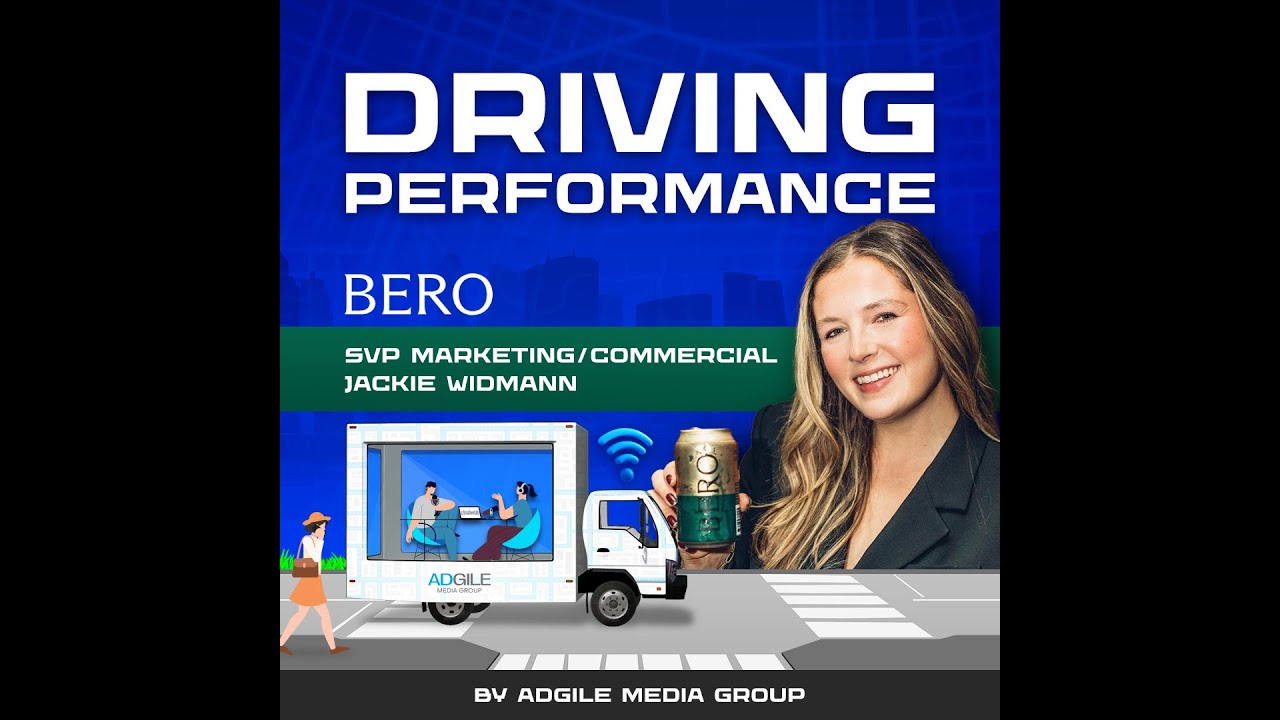
Transcript of Driving Performance S3E9 with Jackie Widmann of BERO, generated from the episode audio and lightly edited. Watch the full episode on YouTube.
0:14 Welcome back to season 3 of Driving Performance. Uh I'm your co-host Tom Shea, the co-founder and CEO of Adgile Media Group. And I am your other co-host, the co-founder and president of Adgile Media Group, Max Flannery. and I'm excited to introduce our next guest, Jackie Widmann. By way of introduction, Jackie is the VP and head of marketing and commercial at BERO, a new premium non-alcoholic beer brand co-founded by actor Tom Holland. With over a decade of experience launching and growing brands, Jackie is a marketing force known for blending analytical strategy with creative flare. She started her career helping build the infatuation as one of its earliest employees and later led marketing initiatives at beer giant AB inb where she developed a keen sense for what what makes a brand resonate with consumers. Now at BERO, Jackie is taking on the booming but competitive non-alcoholic beverage space, aiming to position BERO as the new gold standard for NA beer. Not a substitute for regular beer, but an additive lifestyle choice. Since BERO's launch in late 2023, she's orchestrated everything from product branding to go to market strategy, learning to leverage Tom Holland star power in authentic ways while doing the hard work of building a brand from scratch in a crowded market. Jackie, welcome to Driving Performance. That was quite the intro. Thank you so much for having me. Yeah, you're welcome. So, I'd like to start these all the same. For our audio only listeners, how would you describe what is happening right now? We are in a hot box on on University Place and it's air conditioned mildly. Mildly, but a small close quarters. We're getting to know each other really well beyond our our working
1:47 together. Um, and it's great. It's a really nice day in New York City. So, beautiful opportunity to be on display for all of the West Village. Well, I like to um introduce the structure of the podcast. So, as we are in a truck, the theme is we have a few stops along our route today. So, stop one, we're going to dive deep in your personal story, all the things, Jackie, before you enter the professional context. Then, we're going to transition over to stop two, which is going to be the professional story, talk about the infatuation, ABV, and then obviously being on the the ground floor for launching bureau. Then, stop three is a game we call the hot box. It is a tongue-in-cheek version of this or that stop questions game modeled off the hot seat and then stop four will be our final stop on the route. We'll outro. We'll send you along your way. But you ready to rock? Ready. All right, Jackie. So, uh let's quickly start by going all the way back. Um obviously you really created an awesome uh journey for yourself in the consumer context, but I want to talk about before that. So, where are you from? What's the upbringing? Any formidable experiences or life moments that kind of set you towards this path? Um, yeah. So, thank you guys for having me first of all. So, I'm happy to be here. Um, I grew up in Westchester, New York, about 30 minutes north of Manhattan. Have one sister, parents who have always been full-time working, super super had working family. Um, really great and, you know, happy and and always was really just driven by my family and friends around me who were super motivated and creative. And um I think my family within it has kind of this mix of like super tactical
3:21 executional information people and then half my family is really creative and artistic. And I think I'm sort of a hybrid of the two. Um not overindancing in one than the other should say, but like my sister and my mom um they paint, they do pottery, they're super artistic, have all these hobbies outside of their conventional careers that are very artsy. And then my dad and the lineage on my dad's side of the family, lots of doctors, medical profession, super super intellectual and information based people and I think they have a little bit of both. Um, and you know, love the creative but love doing things that are like backed by data have concepts. Pretty good combination for a marketer. Yeah, I think so. And then what professionally what do they do? My my mom's a lawyer, my dad's a doctor. Risley still works in the nonprofit space and is all about sustainability and green energy and that kind of stuff. I think it's a good trade. I want my lawyers to be creative and especially if you're in a That's right. But yeah, I think you know grew up with parents who just were very interesting and always had like side hustles. My dad's also obsessed with drones. He has like ruined many a drone at family events where he's like trying to get the perfect shot from above and then it ends up in a tree or pool. Yeah, we've done that a couple times. But yeah, I mean I was really lucky. Like my childhood was just full of lots of different areas of like culture and education and and have really all been there. All right. So all those formidable moments and the upbringing. So where did you end up um going to college?
4:53 I went to school in NYU which was sort of opposite of what I expected as someone who grew up not too far from the city. I literally made a list of schools. All of them were like at least a flight away. I was like, I got to get out, see the world. Um, and then my mom actually said, you know, you seem to be interested in like marketing and communications and this world, which it's hard to know when you're 17, right? Like what you're really interested in, but she was like, you're creative. You, you know, you like to learn about business. There could be something at NYU for you. You should go look at this one specific major. Go to the info session. I won't even come with you. Like, bring a friend. She made it very casual. I was like, just go like check it out. And I went with a friend for the day. We like explored this exact area, this street that we're on. Yeah. And I texted her. I remember being like, I'm gonna apply early decision. And then that the rest is history. Um, and NYU was a cool experience. It was definitely not a conventional college experience. You said you wanted to travel the world. You just brought the world to you. Exactly. Um, but have met so many amazing people, you know, in the years that I was there that I still keep in touch with. my freshman year roommate. I had, you know, two from Philadelphia, one from Columbia in South America who had like such an interesting upbringing and just met some really interesting, smart people. Yeah. Mel, what um was it a specific program that you applied into? Yeah, it was the media, culture, communications major and like I was very lucky during that time to just get access to a lot of big churches during this semester. So, while I was here, I was able to sort of like rule out things that I liked, things that I didn't like just from that experience. Great.
6:26 So, let's talk about that. Um because before we get to the infatuation and the postgrad lives, um how did you find NYU? What did you study? What were some of those early uh professional experiences? And and also just speaking about NYU, like you grow I feel like you grow up way faster than the average college. You're not in this bubble. I mean the c the city is your campus. I've said that actually a lot when people say like what's the deal with NYU? And I'm like you grow up fast. You become an adult like three years before your friends do because you're sort of in the environment of going out to bars and restaurants that postgrad people go to but you're 18 19 trying to figure it out and sometimes sinking in depending on depending on where you're going. Um but yeah I took a lot of different classes like some in the business school which were really interesting. Um I took some about like film and television. I took some about a regard and I got to study abroad in Buenoseras Argentina which was really um an amazing privilege of an experience and I was so lucky to have um and took a bit of Spanish to continue what I had started at high school or sub. Um but yeah, I loved it. It was very like diverse in terms of the coursework that you could be a part of, but also the people that were there were just from all around the world, which I don't think can be said for every college. It's a really interesting group of people who all want desperately to like explore Manhattan, make a name for themselves. It was like a very ambitious group of people. Yeah. And I love that. And so, what did you get involved in? What did you have internships? Tell us about sort of as we tee up uh the postgrad life.
7:58 Yeah. Um I had probably five or six internships. I have to see what I can. Yeah. Um my first internship was at a company called Magnum Photos. Okay. which is like I don't even know how to describe it. This is something obviously had to be cut, but this was like 2010. Um, it was it's like a photo database where the images to be licensed kind of like a Getty, but with more like artful photography, not just street style and stock imagery. Yeah. So, that was interesting. It was more like a cataloging admin type of internship. Uh, I interned at Timeout New York for about 6 months during school, which was very cool. Interesting. That's kind of parallel. Well, I interned at the uh the Met Museum in the publicity department, which was really interesting as well. Um especially like going to the Met for my internship, taking a subway up to that from school. That's the main character right there. Yeah, I felt very Gossip Girl and like I was in college when Gossip Girl was filming and I was like, "Oh my gosh, I'm Serena." Um but yeah, there were some really good ones. I I entered at like a PR firm, learned that I didn't want to do that, which is, you know, it's important put back through some of those things. Um, and yeah, I just had some interesting experiences. Those were the notable ones for sure. Got it. And so transitioning to your postgrad infatuation, how did that even come together first before we talk about infatuation? Were you interning there? Was it postgrad application? Yeah. So, I technically didn't graduate early, but I was done with almost all of my courses
9:30 except for one um by December of my senior year. And I reached out to the infatuation via cold email in November, baby. November of 2014. Um the founder, one of the co-founders is actually from Scarsdale, which is the town over from where I'm from. And there's this iconic wing place called Candlelight. Maybe you've heard a bit depending on where you're less if you feel like taking a 30-minute drive for the best wings of your life. Nothing in New York City can compare, I think. Sure. Um, but there was commonality in recognition of Candle Light. I had been an avid reader and fan of what the infatuation was doing. Didn't have any aspirations to be a food writer, but was just kind of obsessed with like the community that they were building, the fandom around it, and was like, there's something interesting in marketing and partnerships there. I don't know if they're hiring, but I sent them a cold email and was just like tried to make the email in the tone of their content and was sort of like, "Hey, make here's why you should hire me." They're very matterof fact. Their whole thesis was built on like, "We want to read and write restaurant reviews that sound like you and I having a conversation about what you liked and didn't like about a restaurant and why you should try it." And um I wrote them an email that was kind of just like that that I'm in college, but I'm graduating soon. I'm free starting gen one, right? You know, would love to chat. And they emailed me back within the day. Came in and met with the team, which at the time was um two co-founders and their, you know, soon to become
11:01 editor-inchief who were working out of an apartment. Early days, really early days. Wow. Because it's grown so much. Yeah. It was right after the founders had quit their full-time jobs to start building a team, but they weren't hiring for what I was pitching them on. Um, but it was, yeah, it was a team of three in the office. And then I think they had just hired someone in Chicago um, as their like full-time staff writer, but that was it. And I was like, "Hi, I'm graduating and would love to work for you guys. I'm interested in the business side of what you guys are doing." And I remember this so vividly. Andrew Seinthol, who was my boss and is a good friend to this day, was like, I mean, it's pretty transparent. Like, we're not making any money now. We need to start. And he was like, "But you have really interesting experience. Love the score connection. Like let's take a chance and do this." And the Moxy. Yeah. Yeah. I think it was like a bold enough email confident, but like I didn't know what I didn't know. Yeah. Based on based on that email copy, like do you want to start working for our lead genen team? It needs a lot of help. Yeah. Um so how did you even hear about the infatuation if it's we're talking that early in the infatuation arc? Um, I was, you know, obsessed with social media since the start. I think like early in the days of being on Facebook while I was like in middle school and shut down. Yes. All of the platforms uploading Facebook albums of like my trip to the store or like a random party that I should have been posting with Red Cups when I was, you know, 14. And I think I just yeah, I was on Instagram starting
12:35 to like look for New York specific content and recommendations. Um, I started some really awful blog that was called like New Yorker chick that no longer exists. Um, we'll find we'll put it in the show. We'll find it. That was basically just like an Instagram account or a website or both that was like I was just posting pictures of food. I didn't realize there were like bigger groups of people doing this in a more, you know, sophisticated way. Yeah. Um and I was always just like interested in different like sub pockets of like culture throughout New York and um saw what they were doing on Instagram. Got very involved in posting a lot of my own like food content on my personal Instagram. When I studied abroad, I started this hashtag and I'm not private, so like this is not something that anyone could see also, which makes it funnier, I think. Like I wasn't trying to be an influencer. It was just for my mom and my 10 friends. Um, but I started a hash calories abroad thing and I was just like very into that would rip in the modern day. Maybe we bring it back. Yeah, that's an homage. I should. Um, but yeah, it was just like a fun thing I discovered. then started very actively like reading their site, getting their emails. Um, and as someone living in New York, like getting ready for graduation, I was just like, "This would be a cool I need a workforce, something that I actually use as a resource to find great places, but also like seems like cool people." Yeah. Um, I loved that it was like scrappy and startup. Not that I had experience doing that, but sure.
14:06 Intrigued. Yeah. I, you know, sometimes um, younger or like aspiring founders or operators come to us and be like, "Oh, you guys raise money. like how did you figure out or do that? And I think it was parallels with you. It's like people want to bet on people who are probably going to do it anyway and it sounds like you were kind of doing it anyway. And so I think you know the combination of hey whether you hire me or not I'm going to be doing this and two I'm also like not shy to you know call email and get involved was probably something that they saw in you. Um all right so talk about the how long were you at the infatuation? Um so I was there for about five and a half years. Okay. um joined as employee number like four through six. There were a couple of us who kind of started at the same time um and was there until we were over a hundred full-time. Granted co had some weird layoffs and unfortunate things where by the time I left we had been from like five sitting in a apartment shared office space and then over a hundred then like down a little bit and I started to hire again. Yeah. What was that like and how did your role change through that insane grow up period? Yeah, I mean I was really lucky in the sense that like part of it was timing and part of it was just I think my drive to keep doing more and learn but I had a boss who really took me under his wing. Shout out I shout out to Andrew Sinthaw still a great friend. Um, but yeah, I was, you know, entrusted with opportunities to be
15:38 in the room. I was hired as like the partnerships manager. That didn't mean anything at the time, but they were, you know, very aware, acutely aware of the fact that they had a massively engaged audience across newsletter, website traffic, and social and how could we sell brands on being a part of this without it feeling like a banner ad that was just Slacking the page and interrupting the editorial experience. So, we were working with brands like before this era of influencer that we now live in where gifting wasn't a thing. It was like getting invited to a dinner put on by American Express and the infatuation. It was very few and far between. So, we were able to sort of leverage this like endemic connection with food, okay, to all these other areas of industry and business that just wanted to connect with culture and cool people talking about things that were relevant in their city. and we were able to work with incredible brands and it was like we were selling content that lived on Instagram or creating content for their socials. It was events and experiences. We created EatsCon, which is a food festival that still exists today. Um, we did tons of branded content, but never content that sacrificed the editorial integrity. Like if Bud Light sponsored a guide to where to go watch sports and have great wings, like it was never Bud Light determining that list. It was, you know, how do we tell a story, drive people into great places, some sort of fun light. Yeah. Um, and so it was really interesting. But when I started, I wasn't just doing that. It was very early days. Super super scrappy, lot of
17:14 hats. Um, there's a story that some of my old colleagues tell a lot when we talk about this early time of like I was probably a month in. We needed to take photos of a bartender for some branded content that we were doing with Jame Whitzky. Okay. And I was like, "Oh, I took photography in high school. I'll shoot it." And I like went with my DSLR. Dad, get the get the drone. I hauled hauled ass to Brooklyn with my camera. I'm like taking pictures of this bartender. We put it up on our site a couple days later and it's like branded content that we sold to Jameson and they were like, "You did that in like two hours." It's just so weird to think about the early days and like the the things you do to just make stuff happen when businesses are that spot. But yeah, I mean I was given a lot of trust and so we started to work with brands obviously like in the early days it was like a 5k package here, a 10k package here. When we started working with partners, we realized that if we did great work they would come back for more and we were able to build a really sound business in this early days of like buying media but in a more integrated way. And so um you know went from maybe doing like a million in revenue in that first year to upwards of 20 million plus after you know not that crazy amount of time five and a half years and this is this like pre-listicles and white labeling and for it was you mean like the tibula era or like some of that it like I'm thinking of the year in that moment in time like the social media
18:44 wave was happening and that was clearly just like perfectly combined together. But the monetization, what were what were people paying for? So, if we were selling a package to American Express, which was at the time all about marketing the gold card, right? It was like you get 10x points when you use your gold card. I'm restaurant. So, how can we create content that like touches multiple platforms, also slide in some ads for the gold card, which get you benefits at those places. And then we brought it to life with dinner events both for influencers and press and media but then like secondarily for consumers. And so they were buying content on Instagram before the days of all the FTC regulations around like hashtag ad and whatever. It was rogue. There were no rules. Um but yeah it was like MX bought a package that included branded content on social, branded content on the web, sponsored newsletters. Um maybe we would run a white label service and find influencers for MX through our network which we were very connected because infatuation was becoming this influential right and we were helping smaller creators grow because that was the day where like hashtags actually drove follower growth if you you know tapped into the trend. So it was really interesting and you know we were able to build this really effective ecosystem where we were in some cases just leveraging our own platforms and pushing content out because we were growing quickly very organically. But then in other cases like we worked with um Door Dash and Caviar and like created our own co-branded IP which was a series called Now that's what I call pizza volume one two three and four and it was like a
20:21 traveling event that popped up in multiple markets and it was a mix of community and influencers and content. Crazy business touches like 18 different channels like an events business and then like you know the newsletter and the social. It's crazy. But I think as an early employee there, I was really lucky in that I was in the room with all of these highlevel marketers who were spending the money with us because it was our team of five that was pitching these brands on why they should get involved. I remember being in in rooms my first year or two there and people would go, "Well, where'd you work before this?" And I was like embarrassed to say in college because I'm like, "How am I in the room with the head of marketing at Whistle Pigt or whoever wherever else?" And um it was very much this sort of environment that I think looking back on it's like I certainly made the most of it in terms of you know making myself a presence that was became friends with the clients that we were working with really tried to develop those relationships and build long-standing partnerships. So, you know, we had Don Julio, American Express partners for the entire time that I was there. And a lot of that was just because there was personal connection ability to really iterate on what was working and what wasn't working. Um, and we were doing a lot of agency services inhouse, but we just didn't market it as that. Yeah. How are you guys finding clients? like what it I we we were obviously joking about the cold email thing, but um I I'm always curious how um B2B uh
21:53 firms like that are are attracting those huge brains. I think a lot of the early days, and I don't want to speak for Andrew and Chris on this, but I think it came from their past lives in the music business. Um Andrew had led publicity at Warner Brothers. Chris was leading marketing at Atlantic. They started the infatuation. And they had tons of brand relationships through their past life working with artists and a lot of it came from the trust that they had already built. And then a lot of it came through inbound as we started to get bigger and brands were starting to be proud of what they did with us. And then we became this like attractive media marketing partner that could be used to help grow small businesses or big businesses. This became like the center of culture. I feel like people flocked to that. Okay. So uh I think that's a good You could have also just told them you're wasn't college. I uh ran comms at the Met. Yeah, that one would have probably landed pretty well. But let's quickly talk before we get to BERO. Um which I'm excited to get to. Uh everything. So why do you leave the infatuation? Where do you go next? And then how do we get to ABMBBE? Yeah. So after a good stint at the infatuation, I was kind of in the process of thinking about what was next. got an opportunity through a connection I had made in my time there to um start to kind of build up an account management team inside a media agency that was really in on the live streaming space before that became a need during co and our business had taken a hit during COVID. It was sort of like the right time to make a move potentially. Um so went over there as their like account management lead. They were a small company that had been around for a while. They now are owned by Horizon Media, but came on to build their
23:27 account management client services division. We did some really cool programs actually with Tito's Vodka and and Hezard Bush um and a couple of other great brands, GrubHub. We did a whole series and it was they were all about like how do we take what people were doing experientially, bring it to you during this time when brands couldn't spend money on events and sponsorships. So, it was a lot of like pre-recorded content that was then produced as a live stream with like interactive online moments so that they could drive brand equity and awareness. So, like you know giveaways and live interactive moments online. Um so led that for a little over a year. Agency life was just not really where I like felt like my cup was being filled. Sure. Um, and I really wanted to be in-house and help build something again and had kind of dabbled in a little bit of freelance stuff on the side while doing the agency work as well. and then ended up reaching out by way of Andrew from the infatuation connected me with um Chelsea Phillips who was my old man old manager at um at Annheiser Bush and she um was hiring for this new team called Launchpad which was their best effort at really taking this idea of building new brands from the ground up and taking small brands that they've acquired and helping pilot them, grow them. the corporate venture almost. Yeah, corporate venture and it was the first like brand team that they had created that was specifically focused on that. Um so came in there um was given a
24:59 lot of opportunity to work on five or six brands during my time there. I was there for a little over two years. Um the team was great. I learned so much about the industry. Yeah, you think you know when you work through your tier system and all the crazy mumbo jumbo. When Annard Rush had been a client of the Apatuation, Son Julio had been a client, I was like, "Oh, I know what it's like to work at Beverage Bridge." And then you go in-house and you're like, "Whoa, this is boot camp beyond belief." Yeah. Um, and it was it was super fun. I you know, great people, learned so so so much. wasn't really looking for anything new, but by way of connections and the world world of community slacks and industry connecting um I had a good friend that I had worked with from past years who um had been running marketing for giant kombucha. She was part of the startup CPG the giant with the J. Giant of the day. Oh, I'm so Larry Lee. Yeah, there um she's a shake shag now. But anyway, a friend who was who was there um she was part of Startup CBG. No, we love them. They're the best. Yeah, they're great. Shout out to Daniel. Yeah, that guy works hard. He does. And um yeah, I I was not a member of it. I didn't even know it existed when I was at Advisor Bush. I feel like it was too big corporate that we were like so unaware of all the sort of like pockets of culture that exist within the world of beverage and CPG. But um she saw my now boss John post looking for um a head of marketing for a venture-backed celebrity founded nano startup. No other information was given.
26:33 She sent me a screenshot and was like this sounds like it would be perfect for you. I don't know if you'd be interested. And I said do you know this guy? And she said no. And I said okay well happy for you to send him my resume if it makes sense. But again like total shot in the dark. Yeah. Um he reacted positively where he did a resume and we got on a cool call that this was like over winter break in December of 2023. Okay. Had a bunch of meetings. Realized once I had sort of met all the people he had hired already which was our brew master or SVP of operations and then a few of our investors from Imaginary. Um I was like I really want this job. And they had me do like a 30 6090. How would you tackle this? You don't have a brand but like what would your first couple months look like? And it was Chris's break and I was with my boyfriend's family for the first year of us spending the holidays together. And I was like, I have a project I need to work on, so I'm going to scoot myself out. um and went really hard on you know trying to position my experience in the best light possible because I was really really passionate about the non-al space and um just excited about all the people I had met and I really wanted to like be a part of something from the founding team again and it felt like right place right time right background. Yeah, it was cool. The ABMBBEV experience. I was expecting my questions was going to be okay from the ground up infatuation like this really early days scrappy startup then AB InBev but it sounds like that exposure was kind of skewed or fairly unique in the AB InBev or that it was these like early stage experiences
28:06 and then that that's actually been the through line. I thought it was going to be like a a pivot back. It was a it was a mix because I worked on a couple brands that we fully incubated and created in house and then I worked on a couple of joint ventures where there were outside founders and there was maybe a new product line extension or a new product altogether but that was created in partnership. So it was interestingly a really nice tea up for like the stakeholder management that's involved in my job now but kind of a weird throughine that was not intentional whatsoever. All right, stop number two. We're excited to talk about BO. Um I'm going to let you introduce them and then we are going to do a nice cheers of the product. So first off, please introduce BERO. Um tell us a little bit about the founder, the origin story, and then we could dive deeper on what the experience has been for launch and post launch. Awesome. Well, so this is BERO. We are a premium non-alcoholic beer. Um we launched the company in October of last year, 204. And Tom Holland is our founder and creative visionary behind really everything that we do. But the brand was created, you know, derived from his own experience going through his first ever dry January a couple years ago and really wanted to create a product that was for him during this time of, you know, coming into adulthood, being at bars, being at restaurants with friends, going to the pub and craving this social inclusion, but not wanting the effects of something like alcohol, which obviously we all
29:38 know how drinking too much can make you feel. Every time I drank my my aura ring ring will tell you screams screams at the list. But yeah, we we created this product because we really felt like the non-alcoholic market is booming right now. People are so focused on their health, their wellness, and you know, really making choices that are better for you. So whether you're sober like Tom and have this journey of sobriety that you might be going on with your first ever dry January or participating in a sober October, that's amazing. And BERO is for you. But also, BERO is for the person, you know, that I identify as someone who might want a martini but wants to follow it with a bureau because I've got things to do and I'm ambitious and driven and I want to make the most of all of my time, whether that's socially, professionally, um, with family and friends and really just wanting to maximize life. And so I think that's been a lot of our ethos with the creation of BERO is really about like saying yes to all the things in life that spark joy and doing more and not taking away anything. So a lot of brands out there, we did a whole audit very early on before we created any of the packaging. We did any of the branding or or comm strategy noticed that a lot of the brands in the space are sort of speaking to NA products as lesser than not on purpose necessarily, but it was sort of a part of the like no alcohol, no hangover, no problems. And we wanted to flip that on its head a little bit with our comm strategy and sort of say
31:10 why does this have to be anything less than what you expect. So, expect nothing less has been a tagline that we've sort of led with that you'll see on our website and in other places. Um, but really this idea of like being a beer that does both. So, we are for the high performer. We are for the person who loves to go out and dance at the bar. We are for the mom and the dad who might be out watching their kids at soccer but need to be able to drive them home. They want something great in their hand while they're doing it. And I think the last piece that I'll mention is really on the side of premium. Tom in his own sobriety journey looked at so many brands in the space. Couldn't really find one that he felt like not only tasted great, but also looked and felt like it represented him and his style and in his life. And we created this really to be this more premium option that people feel proud to hold because the branding is awesome and it's delicious. And we also wanted to create this kind of movement and community that people would hopefully want to be a part of. We're still in the very early days of building that, but Tom has been such a huge piece of the puzzle in terms of defining that vision and and really driving a lot of the creative strategy uh since we since we've been in marketing. Yeah, I love the authenticity of the founding story. And I also just speaking personally as someone who I think indexes to the category maybe more than the average. What I always loved about it is the being able to say yes, right? Like if you do remove drinking and if we're in New York City, right? like you lose half of your social engagements, right? You like are kind it's kind of exclusionary if you're not opting in.
32:43 And so I've loved I've loved having options where you um can still participate in those things without it feeling weird or stigmatized. I've also felt there's something ritualistic about it. And you know, as a psychotic type A person, I love the idea of I still get that ritual even and I don't know if it's like an associative property, but I feel like at the end of the day, I'm still getting that relaxation that that I'm there for there for the drink in the first place without all the crazy side effects that come with that. Um, question for you. Uh, what's it work? What's it like working with Tom? We've talked a lot on this season in particular about celebrity versus create creator. I would love to just hear about your experience working with Tom. It sounds like he's really involved and supportive. That's not always the case. What's your experience been like working with Tom? I feel like we are so incredibly lucky to have a founder like Tom when I started this job and you know, you learn more about him and his ecosystem and all the layers of his career that are far beyond what the average person gets to see. Um, he's a really busy guy. he has so much on his plate and his schedule is jam-packed and he's super passionate about so many things that he does, but um we've been so lucky that BERO has become a really really top priority and he's of the slate of things that he has on his to-do list. And the best thing about Tom is that he will sometimes just say, "Hey, on text, you know, I want to see this. What are you guys working on?" And I think his proactivity is one of the best things about him. like he's just
34:14 incredibly dedicated, you know, he wants to be involved in this for a long time, which is a special thing to find. That's always awesome. We talked about um the craziness of the alcohol industry and the three tier system. Um does that apply to a non-alcoholic beer? So, it does and it doesn't. It depends on where you want the product to be distributed. So, we have, you know, been very focused on building an onremise channel strategy, right? We want to be one thing we say a lot is we want to be on every bar restaurant menu across the country hopefully. Deal out there. There you go. PFJs give me a call. U but in order to get in at bars and restaurants which primarily source their products from traditional beer distributors. We have to build relationships with the distributor network. That process which I will give a shout out to Declan Dugen who is our SVP of sales. Um, Dean has done an absolutely insane job of building our distribution network with such pace that I think he should probably be in the Guinness Book of World Records. Um, we it's the BERO Book of World Records, just to be clear. Yeah. Um, but, you know, the the world of beer distributors is really matrixed. Some states there's one distributor that covers the whole state. In other states, there could be 12 to 20 different distributors in order to get different regions and different pockets and cities covered and you know get them access to your product. Declan has managed to get about 80% of the country covered in less than a year. Wow.
35:45 Which is really amazing particularly because we have only just started hiring salespeople that report to him over the past three months. So he has built a network that is ready and willing and now we're sort of playing this game of catchup of now starting to service those distributors, starting to make these, you know, line review meetings happen because we actually have the infrastructure and team to support it. So a lot of people will ask like, "Oh, you guys have been in New York since October, like how many restaurants are you on the menu at?" And it's like, "We're getting there, but we've only just hired a regional sales manager that sits in New York and he started, I think, on Monday." So, you know, we are we're we've done a lot with a little in terms of team and resourcing and I think he deserves a ton of credit and the team the team has been really lucky that we've all just had um you know we've been able to move with a lot of agility which is unique. You got John too. I mean John's a juggernaut in his own right. I'm sure he's brought so many parallels from C4 Neutravolta into the another shout out to John Herman our CEO. incredibly well-connected, intelligent, just really really knows how to build a business and navigates decision- making super well. He's really giving killed, which I love about him, just for such a high stress, high growth company. He is super calm and level-headed, really takes in information before making decisions. And um yet he comes with a lot of amazing relationships and people who trust and love the work that he's done in the past. So, we've been lucky that we've been able to bring some of that to the BERO business.
37:20 That's great. Um, I know we talked about the messaging to the consumers that BERO is an addition, not a substitution. What formats are you leveraging to deliver that message? Um, what what marketing channels are you leveraging? Um, and given that it's a a fairly new brand, um, have those marketing channels changed at all from launch until now where you're the only 80% of the country? Yeah, I think when we started pre-launch, it was a lot of our own channel and messaging on organic social and then some paid social as well. Um, we have onboarded some great PR partners. So, we're starting to tell that story through the lens of, you know, earned media coverage and we've had a lot of different like pulse points and initiatives to sort of weave that messaging into. So, whether that's a new product launch, whether that's a dry January campaign, whether that's um activity during winden week, which just happened, you know, we've been able to sort of weave in that messaging without just making it a call to action that's super straightforward every single time. I think it started more simply and then now we're starting to dabble in the world of media, retail media for sure, influencers, gifting, giving people a couple of talking points, but letting them riff in their own voice and language. We have a mix of like payto-play influencers that we're working with, but then also a really robust gifting and seating strategy. So, it's fun to see how they tell the story of BERO when they're either surprised and delighted with it or if it's part of a program, right? Um,
38:52 but we've loved that process. And then we're doing a ton of events where I think like content creation at those events. You were just you're on tour right now. Tell us about where you just came from literally like 12 hours ago. Yeah. So just landed after a crazy 10 days or so in London. um BERO had its first kind of dip into Wimbledon, not as an official sponsor of the tournament, but really trying to find cool adjacent opportunities during a very saturated and hightrafficked week with influencers and celebrities and media um to make a couple of moments that were really fun for the brand um in London. So, we had a couple that I'll quickly shout out, but Chase Sapphire has become an amazing partner of ours. We launched BERO in the airport lounges a couple months ago. Infatuation, baby. We're back. Relationships are everything, let me tell you. Um, but yeah, Chase has been carrying BERO in the airport lounges now at all Sapphire lounges across the I had I had one the other day. Really? Yeah. On on my bachelor party. Yeah, I had mine on my way to London at JFK. It was fantastic. Um, but they were doing some really awesome Wimbledon activations. They had a Wimbledon cottage that they were building out where card members and media and celebrities could get access before they headed over to the matches. So, we had Tom there for two different days of like panel discussions and introductions with different types of people. The first was more of a media and influencer focused event that was just telling the story of the brand interview style panel coverage. He, John, and a reporter from um a great publication in London told
40:24 the story together. And then the second day was more of a like networking opportunity. They were hosting a bunch of travel executives from different hotels and hospitality groups and really high level people who were excited to get introduced to Tom, meet the brand, taste it, see it, feel it. And so those were two great opportunities that we had. And then we created our first brand own moment which we're calling the bureau paddle classic. That might have gotten more earned media impressions than Wimbledon. I think if we're tracking properly from our agency partners as we've been tabulating things are still coming in but it was close to a billion impressions in the force of the week which is pretty incredible. Um but we created this prom tournament. This was Tom's brainchild. He brought it up at our board meeting in the end of April which we had been sort of talking about what our Wimbledon we could look like and he was like no let's do it. Let's make it happen. So with a lot of efforts and you know not enough shout outs to even count to the partners and freelancers and teams that I brought on to help us do this but we we pulled it together in less than three months and had some amazing celebrities play in the tournament. So it was a celebrity paired with a professional. So we have like Arturo Co and Simulu and J Shetty and Juan Martin Diaz and some of the number one players in the world and in the UK playing alongside of amazing celebrity talent. So it was a really cool day. Um I think one of the proudest moments for us was that we created this event, you know, to bring community together.
41:57 Granted, it was a more VIP curated group of community members, but the early media that came from it, no longer really paid to be there, right? Um, aside from a couple of the really top athletes, but we, you know, made an effort to make an experience that felt premium, that felt not stiff, so people weren't walking around expecting paparazzi. There was no, you know, none of this nervousness or anxiety that comes from these big celebrity moments and events where you're, you know, afraid to be yourself. It was very inclusive. It was very Tom to its core and so many people with massive followings both on and offline shared about it and we grew you know over probably at this point about 20k followers across social platforms on Instagram and on TikTok which is really hard especially on Instagram right now. But the content that came from it, the relationship building, we had some great sales leads that came from it in terms of UK distribution. And it was just a great way to like bring the world of bureau to life in an environment that was totally bureaued and controlled. Awesome. And we also had some great sponsors that came in last minute. So Chase came in, Aston Martin came in, guilt trace came in, and we had Viori come in as well. And they did a whole gifting suite with collab merch items. And that's us decked out the You're You guys are making me thirsty. Yeah. So, yes. Let's crack a beer. We're at stop three, the hot box. And so, before we start stop three, I want to Oh, yeah. Yeah. We wanted to get a little bit of a a cheers moment. Some live UGC of our product. So, Jackie, what which skew do we have here?
43:32 So, this is the Kingston Golden Pills. It's our take on a really crispy and refreshing European logger. This is my favorite if I just like want a pulled great beer. Um, it goes well with or without food, but I think if you're going to eat it with food, it's great with like a burger. It's great with like grilled chicken, summer barbecue. Um, and it's just really refreshing, delicious. I I think better than anything in the market. All right. Well, let's see. Ready? Let's get it on the mic. Should we shot on them? No. Nice. Cheers. Cheers. Thank you for having Cheers, guys. It's really good. It's good. I don't think I would if you blind taste tested me. I don't think I'd be able to alcohol. It's fun. So good. If you go look on our TikTok, we did a whole series because we're on the menu at D West. Shout out D West. So good. We did a whole series of blind taste tests with just random people coming in for their trivia nights and people were shocked to find and we did it against an alcoholic competitor that makes the logger. Um, a very popular one I might add and not only did we come out on top in terms of flavor and preference, but people were shocked to find out that we did not have alcohol. We didn't disclose it up front. Yeah. We just said we're crazy. It's so good. So that was really awesome to see. Um, but yeah, this is this is our OG Kingston. Kingston is the town that Tom grew up in and very much like the sort of originals threepack hero skew.
45:08 That's really good. All right, we'll cool down because we're at the hot box stop number three. Jackie, are you ready? Ready. Give up email or give up slack for life? Give up slack. Yeah. Cold plunge or hot tub? Cold plunge. Sweet snacks or salty snacks? Salty. sampling in store or influencer unboxing. Can you sample this in store? You can. Michael, can I give an answer that's not an answer? Yeah. I'm going to say sampling at restaurants or bars more than influencer unboxings. But I think showing and letting people taste where they actually want to buy it is the most effective way to drive that conversion. Coffee or tea? Coffee. Canva or Figma? Canva. Winter or summer? Summer. Protein or fiber? Which is a bigger consumer trend? Protein. Telepathy or teleportation? Teleportation. Chip. Neat or messy? Uh, neat. DTC or D2C? DTC. $50 for you putting it on red or black. What is that in roulette? You're not You're not You're putting it in your pocket. Yeah, I'm taking that money and buying some bureau. In-house or outsourced? In-house. Board games or video games? Video games. Spotify podcast or Substack? Deep dives? Substack all the way. Oh. Beach house or ski house?
46:46 Beach house. Work remote or return to office? Return to office. That might be controversial, but hey, that's what that's what we're here for. Sunrise or sunset? Sunset. Twitter, LinkedIn, Instagram, or TikTok? LinkedIn. Pineapple pizza or candy corn? Candy corn. Live music or DJ? Live music. Advertisement or advert? Advertisement or advertisement? Advertisement. All right, Tom. Tom, I'd say advertisement. Call, text, or audio notes. Call. Give up bread for life or cheese for life. Oh, that is so hard. I think give up cheese. Wow, both. Cuz you need a vehicle for all the condiments. Bread is that vehicle on earlier. Yeah, that was pretty good. Are you doing air guitar or air drums? Air guitar. Start early or leave late? Leave late. Trucks or billboards? Trucks. Receive good news first or bad news first? Bad news. Well, the bad news is we've come to the end of our show. Jackie, you've been a really great guest. Thank you so much. Hearing your story, hearing the bureau story has been incredible. I'm so excited for you. I'm so excited for the brands. Um, we wanted to wrap up by letting people know where can they connect with you and then where can they find BERO. I don't know if we have enough time to list all the places, but maybe some some accounts where they can go find and try the product. Um, well, you can find BERO in a lot of different places. You can find us at bureau.com. You can find us on Amazon.
48:21 You can find us at Target, Sprouts, Total Wine, Arowan, Bezmo. The list goes on. We're going to have to start doing where can't we find um, we have an amazing shout out, Dean. We have an amazing store locator that's starting to get populated with all the great retailers and bars that stock with our products. So, check that out. You can find me on LinkedIn and on TikTok. My Instagram is just private personal. You can also find calories don't count broad. I was just going to say she says her Instagram private, but just a peak calories don't count on. Well, cheers guys. Cheers. Thank you so much.