Full transcript
Transcript of Driving Performance S3E13 with Noah Friedman of Top Shelf Ventures, generated from the episode audio and lightly edited. Watch the full episode on YouTube.
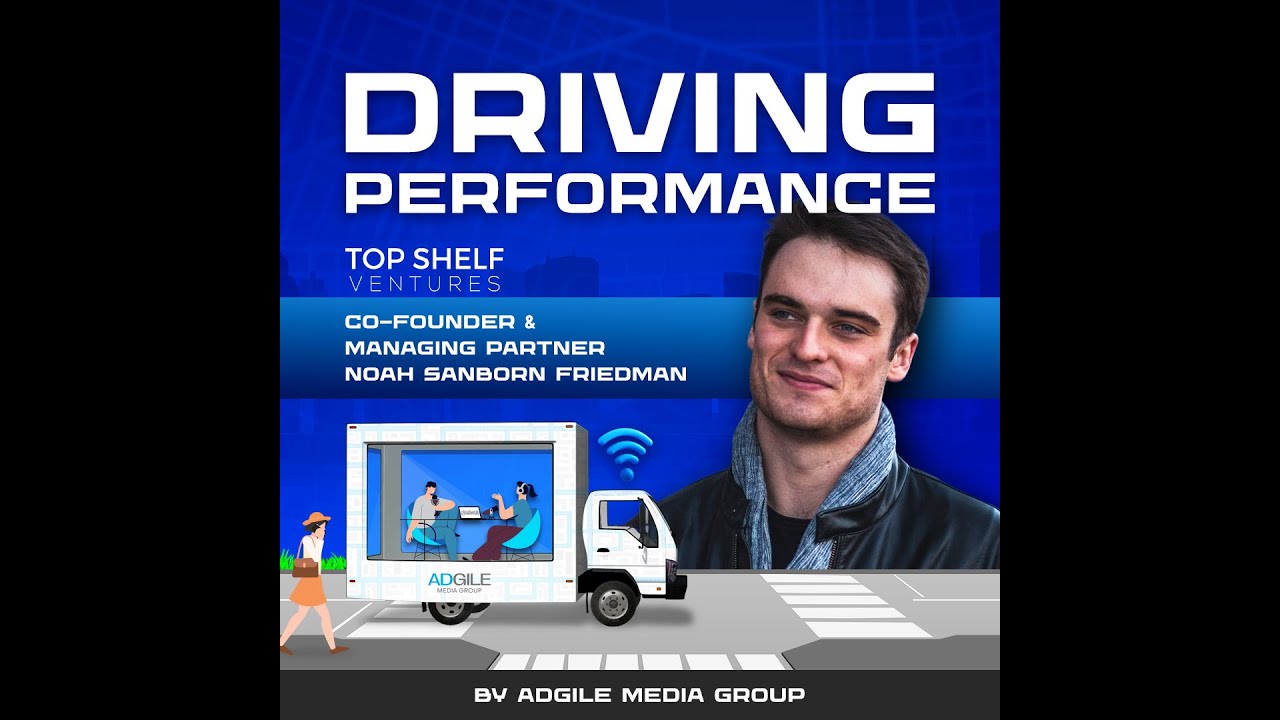
0:13 All right, welcome back to season 3 of Driving Performance. My name is Tom Shea, your co-host, the co-founder and CEO of Adgile Media Group. I'm joined by my co-host, Max Flannery, co-founder and president of Adgile Media Group. And we're excited to introduce our next guest, Noah Friedman. By way of introduction, Noah Friedman's the co-founder and managing partner of Top Shelf Ventures, a venture private equity fund focused exclusively on opportunities in the multi-t trillion dollar alcohol and vices industry. In other words, Noah and his team are working to hunt down the next big innovations in spaces like spirits, beer, cannabis, and perhaps even gaming and other vice related consumer sectors. He's also the co-founder of Uncharted alongside Michael Loeb, which Max and I have had the great pleasure of attending their programming over the years. Noah, welcome to Driving Performance. Thanks, boys. Good to be here. Thanks for having me. So, I like to ask the same question of all guests at the very beginning here. For the audio only listeners, how would you describe what the hell is happening right now? Um, this is out of home gorilla marketing at its finest. We are in a lovely almost sauna, but thank god the AC is on. It's a truck parked right near you. This hot box. Definitionally the hot box. Thank you for the AC again. Um, every side of the truck is clear glass. There are people stopping and looking asking what the hell is being put here and uh this is performative marketing at its best and honestly I said this before we started a great case study for why agile is such an awesome business because it turns heads and gets people to stop and pay attention. I appreciate that now. All right so I want to introduce the structure of our podcast
1:43 as we are in a truck. Uh the theme is we have a few stops along our route today. So stop one is going to be the personal story all things Noah before the professional career before Top Shelf before Uncharted. Um, stop two is going to be the professional story. We're going to dive deep on Uncharted. Um, Top Shelf, and I'm excited to talk about Outersignal a little bit as well, which is a new investment for for uh, Top Shelf. Stop three, Noah. Not Top Shelf, for Noah. Uh, for stop three, the hot box. Uh, it's our ripoff of the game called the hot seat of this or that style question game. Where the wings? They're coming. They're coming. And the joints are also coming. Uh, stop four is the outro. Uh, it'll be our final stop along the route. we'll send you on your way and uh we'll go from there. You ready to dive in? Let's ride. Let's do it. All right. So, Noah would like to start from the very beginning. Um you've obviously had a really awesome professional career. I want to start with a personal backstory. Uh who is Noah? What were some of the formal moments that brought you to where you are today? I grew up in New York City. Uh only child, amazing parents. Dad was slash is an actor. Mom is a therapist. Um so very EQ heavy household if you will. Sure. Um, I had a transformative and transformational moment when I started playing travel hockey when I was uh like nine or 10. Okay. And growing up in New York City in a actor and therapist household, there was an emphasis on emotional skills and soft skills and I went to a very progressive private school. Okay. And I'm very grateful for the fact that I had a uh hockey coach. His name was Dan O'Brien. Shout out Dan.
3:16 Shout out Dan O'Brien. in the very off chance chats that we would say 0% he ever listened to this because I don't think hockey coaches love this stuff but hey Danny thank you if you listen um he basically can I curse yeah he beat the [expletive] out of me for many many years and just instilled a whole new appreciation of discipline and hard work that not to take away from my parents not putting that into me because they did in other ways but the athlete mentality work hard mentality almost military style mentality that um I can't claim military because I wouldn't discredit credit and disrespect the actual military, but that level of intensity pounded into me early and I'm super grateful for that because I think it was genuinely transformational for me like building a discipline and understanding the connection between bowls and hard work on a team and a very distinct moment that I'll never forget that I just think is kind of illustrative of what he did to me was training camp to like I don't know second year playing or maybe first year playing tribal hockey at this point 10 or 11. Yeah. Early and malleable. Yeah. malleable and he's just making us do suicide sprints on the ice which if you played hockey suck and if you even play any sport you know that suicides are just the worst and you're in a very dark place and he's making us all do push-ups and I could I could barely do that. Brad is just a total wuss and like it just wasn't happening and I remember him literally coming up to me in front of the whole team. I'll never forget the moment as I'm like on my knees failing to do rep three of the push-up to do which I'm guessing the 10 and being like no if you want to be a real epin hockey player I need you doing push-ups every single day for a long time right because
4:47 this is unacceptable and uh the next morning I woke up and started doing push-ups and that was you know 20 years ago at this point and since then I've missed a total of four days of actually doing the push-ups I was looking good now and um you know the four days that I missed was either due to crazy travel a legitimate injury and I still tried to find way around it or just like you know being a dummy but you know four total days I'd say is pretty good. Yeah. And so I think that's kind of the the type of stuff he instilled to me. But I had that and hockey was a huge part of my life as was just being an athlete. Then I also got into theater and acting and performance and studied theater in high school which if you're a jock or played profession I'm not professional at any level of competitive sports you understand based on the locker room dynamics that being an actor and a performer is not necessarily something that plays in the bro culture sports and so it kind of created these early moments for me where I had to like reconcile how to think about that. I was like I like this acting stuff and like the people that I'm in these plays with are very different in a good way from the people I'm in the locker room with. like how do I manage that tension? And when you're young and not as mature, you have to try to figure out like how do I how do I even like think about how to not only admit it but like lean into it and so there were a lot of early moments of like try to figure out how to make both of those work. I think that the tension between those two was fairly formative for me as an entrepreneur investor and you guys have seen a lot of the stuff I do with Uncharted. Like there's a lot of front-facing things that a lot of the world that I'm in now from running businesses, starting companies, raising funds, deploying, being in front of people like a lot of my job and
6:19 frankly the job of any entrepreneur you have to know how to do sales and more importantly you have to know people. Yeah. And so I think that the acting stuff was deeply deeply important and formative to me. So I would say the three kind of through lines just to bring us all circularly in terms of like me and how I grew up was amazing parents that were very supportive. Uh a deep appreciation and almost like instilled sense of force discipline early and like hard work that came really from hockey that has never left me. and um acting in theater that provided a foundation for knowing how to communicate ideas, deal with people, interact, read energy, all the things that you train in as an actor that have all put the circle, I think, to be at least a good intrinsic foundation stuff. I do. Yeah. Your hockey coach uh reminds me of her herbs. Yeah. Picturing you on the on the suicide line miracle. Who do you play for? To be honest with you, there's some very funny stories of like playing competitive hockey in New York City. There's a lot of like you know just going to be blind like rich kids from the upper east has ever been yelled at by someone. So there was a lot of funny moments. I didn't grow up with a level of money linked down but like having people just like seeing these kids who were uh still good friends of mine and it's not to take anything away from them just like get the [expletive] kicked out of them as someone who was like a Canadian savage who could not give a [expletive] what your dad does. This is like you're not working on a bunch of fake teeth. Exactly. Or do teeth. Yeah. Right. Yeah. There are some good moments. Um, all right. So, fun trivia. I never knew this about you. Dad, actor, mom, therapist. Before we even get to the professional stuff, tell us about their careers. I I can see the influence in the through line. It's
7:57 clear you've brought those skill sets along with you, but that's pretty interesting and very different. You've charted a different path. So, why don't you double click a little bit on the parents and their influence? Yeah, for sure. I mean, anyone who's been to Uncharted has probably met them. I make a point to make sure that they get a spot every single year, even if it's super sold out. just that's a fun moment for them to be there. But they're amazing people and I'm still super super close if we'll continue to meet with them. I think both entrepreneurs in their own right like being an actor and actually achieving any level of success in the brutal business that is try to be a performer is tough and my dad studied theater in college and managed to find himself a nice niche doing voiceovers. Okay, which was hugely helpful in actually like making some level of money and income that could put me through at least portions of college and um actually like give us a life and foundation. So, you know, if you've ever heard Honey Nut or Cheerios commercials or A1 steak sauce or Crest Pro Health or Chase, at some point in your life, you've probably heard my dad's voice, which is pretty cool. And then, uh, my mom deep passion for helping families and children and she fell in love with I think, you know, I think she would put it as helping children and families dealing with chronic illness and loss. So, super heavy stuff. Yeah. Really, really heavy. like mom gets cancer and is going to pass or dad just died or son or child is sick like how do you as a family reconcile that and so she started her career in Belleview uh dealing with like you know generally lower income children who didn't have any level of understanding of how to like be a self- advocate in an environment that was not really looking
9:27 out for them you know kids with leukemia the whole thing right um and then eventually spot out uh has continued to run road private practice where she just works with children and families that are dealing with any level of chronic illness, loss, tragedy. And uh despite all that, she still somehow manages to keep an amazingly positive outlook on the world. Yeah, I think the stuff she does is genuinely that's on our whose idea is it to send you to the gnarliest uh hockey was there any logical ties to the hockey or were they looking for something that they thought they were was missing or hockey? I I don't I think the hockey thing started because I had like a couple buds when it was like five or six that were playing. I thought it was cool and different. I used to do these clinics out of state and started to play in Central Park and like a much less competitive league and I was like fairly big and relatively athletic and there was a moment where like the really big travel team in New York that I didn't think I would make. I went to try out for and was pretty sure I wouldn't make it. And credit to Danny. I think Danny O'Brien, I think he saw something in me that was like, you know, this big kid who seems to be weasly athletic, but clearly has a coach has the potential. And I think I was like the last slot that they change. Yeah, that's awesome. Um, so mental health is a is a huge topic, especially recently. Yeah. Um, and I really wasn't exposed to like therapy at all until becoming an entrepreneur, moving to New York, I feel like, and and just the times have kind of changed. The the stigma around it has changed. Um, how was that growing up with your mom being a therapist? like were there, you know, formal sessions or or do you feel
11:04 like you have uh, you know, a better perspective on life or or a stronger mental health than than someone who did not have a therapist as a mother? We definitely didn't have forced the therapy sessions where it was like, "All right, session starts now and go to your room again in an hour." But I I definitely think it gave me a better foundation for understanding how to like process or at least talk about emotion in a higher EQ way. I think one of the big issues facing frankly men in general is that you are kind of unintentionally or directionally trained to like not talk about your feelings and not have any level of like willingness to be vulnerable, right? And so having a dad who was trained in like actually performing and like allowing himself to tap into emotions to be vulnerable and emotional and display those. And then a mom who did that for a living was certainly either directly or indirectly foundational and like allowing me to have some better foundation of just like being more in touch with the emotional side and understanding people on a deeper level. like you guys are founders, you know it, like understanding how to read people, whether it's your team or investors or you're selling to or clients or whatever it may be. It's like really important, right? And so I think that that foundational understanding was super valuable. And then that coupled with the like just maniacal intensity of sports. Yeah. I think was a pretty good combination. Yeah. And going back to what you were saying, um, you said that, you know, that almost everything that you do as a founder is somewhat related to sales. I think that sales is a lot about being able to read what that person is
12:41 feeling, right? And then tailoring your approach of should I go harder, should I back off, you know, and self- advocacy, I think, you know, like the performance component of as that picture actor, it's you're always using those skills and even if it's supporting like a spouse or a partner, right? you're always kind of like performing and selling yourself. Well, I think the best sales people in the world, the ones who are truly world class, never just read a script, have your talking points, but the real art of sales, real art of sales is understanding how to play tennis person. And like you guys have done enough demos where you're like, "All right, what am I working with here?" You could have on one side of the spectrum super excited, bubbly, engaged, nodding, smiling with it entirely, and then you could have on the other end of the spectrum brick wall or even camera off. not responding, not responding to anything. And you know, if you've taken acting or improv classes, like that shit's important because you like actually do know how to understand and interpret like, "All right, I got to work giving right now." And you know, I'm sure everyone who's listening and certainly you guys have had stories of like the moment when you kick what you thought would be the worst sales pitch of all time and it ended up coming through because you thought one moment. And so a lot of what I think is the real art of sales is like you need to just like be like a metal detector to search for something that can evoke a response. And like something that I think is a huge tell is is the saleserson asking questions at the beginning. They're just going right into a demo or a script. They're not going to be able to play that. I was think about a DJing like a DJ is essentially they're going in with a plan but you can know damn people are responding well to this like hard pivot
14:13 in this direction. It's like keep it going. That's a great analogy. If you're into music at all or even bands or certainly DJs, you've seen bad DJs and you see good DJs. The best DJs I've ever seen are like in lock step with the crowd. You're like having them fall every song, every beat drop and it's so reactionary and it's it's like a conversation. The music to the people and the energy of the crowd and how it all connects. It's it's pretty cool. Yeah. DJs open their set with a question. They have to say, "Are you ready?" How at the qualifying is it in the rare? in Orlando. What are we about to play? Um, all right. So, that's early days. Let's talk about uh college. Uh, I went to BEu. Uh, go Terriers. Go Terriers. Yeah, I went to BC. I do hate it. We're supposed to hate each other. I really I'm not I don't mean to talk bad about BU because I met two of my best friends, but I was an anomaly there in pursuing anything entrepreneurial at all. Right. That wasn't for hockey, was it? No, it wasn't for hockey. I played a couple years of club, but I I decided after high school that I wasn't going to make the NHL and I probably could have made played somewhat competitively in Canada, like making the three low D1, but I was getting pretty into business at the time and I was like, you know what? Yeah, this is a better path. Yeah. So, I went to BEu. I had a good time. I enjoyed it. I met some great people, many of whom are still friends. That is not an entrepreneurial school whatsoever. Right. Um, I had the great fortune of my sophomore year spring break meeting Michael Loeb and that was definitely a transformational moment that was a trajectory shifter and just in terms of how that opened up my world and I ended up working for him directly or directly
15:46 or with him basically from that summer sophomore summer all the way through graduation in fact still in many ways. So two two things one introduce Michael up for those who might not know him and his back story and then two how did you guys link up in the first place? Yeah, Michael Loeb is a serial entrepreneur who has built and funded and had a hand in at least five unicorns like a big hand and uh has invested and done well for his his kind of defining early moment was he got fired from Thai bank for trying to start a business within it. Then he ended up getting fired starting outside of it and then they bought it back from him. Shout out. Shout out. And then in that we love that we have a we have a you know spikes spike can be a strong motivator is and uh in the new company he incubated a little business called priceline.com that ended up doing pretty well and um was kind of one of the OGs with a pharmacy benefits discount model which had he had a business that was spitting off you know nine figures in profit like just massive massive business and his family office that he started with his longtime partner and now my very good friend Rich Vogle they started that in mid 2000s late 2000s and it basically is a deadly office that operates like a venture fund, venture studio, right? And I met him my sophomore year spring break where there was this entrepreneur boot camp that I was I applied to and was the youngest person accepted to by about a decade just out of pure hustle. Uh it was a Josh boot camp cap to like real founders like doing real businesses that was basically like we went to the [expletive] built [expletive] office in your kind of building for three-day intensive of you know how to manage your cap table and how to hire a CTO like all the stuff
17:21 like kind of building companies 101 put it on Andrew's road mapap stab and Michael Loeb sponsored the like closing cocktail party and I remember I walked to do his house and I well man you've been to his you've been to that yeah part he's like what is this place what is this guy It's crazy. So, I just made a point to shake his hand and say hello and I probably stuck out cuz I was 19. I was willing to do it and I basically said something along a bunch of like, "Hey, I'm going to email you. Remember my name and remember my face. Please look out for the email." Because I was like, "I'm not going to talk sh I did remember it." And fortunately, he brought me in. He said, "Hey, when you're back from college, uh, come in and let's just talk." Yeah. And it was a 15-minute meeting on the calendar in like June or something. My plan was to kind of work on my own startup that summer and an hour into the 15inute meeting. He was like, "You know what? Your business idea is cute and it seems like it's going pretty well. Why don't you just intern for me and you can work on that too, but like I want you in here." Yeah. What does an intern do? And he was like, "I don't know. Just start." Okay. So, I showed up on Monday and um you know, in many ways, the rest is history. By the end of that summer, we had built a very close relationship. uh he had become very quickly a big mentor figure in my life that I felt both very grateful and deeply deeply energized by having so much exposure to like real [expletive] that early in my career right when I was in college the classes were not that exciting I was like I'm taking bargaining classes that are outdated and finance stuff was cool and I learned some stuff like being in a business school when you're watching the world change and just in classes this ah this
18:57 really isn't it so being and having such direct accessory to the real thing that was being built was a big deal. How do you even get down the business route in the first place? I mean, you were went to BEu for business. I went to beer for business. I got into the business school luckily in the honors program which is pretty cool. And well, like none of the previous stories lead to business directly. So, I started I started realizing that I was excited and motivated. I'm just going to be blunt by money and building things. And I like found it exciting and I I started to follow the energy of I met some of my dad's friends who were in business and I got really close to a few of them. we became mentors and I started to just get fascinated in high school by like the markets more broadly at what companies were being built and I just think there were some forwarded moments when I met some of my dad's friends who had done well and I saw they driving fancy cars like running companies and we go on vacation with guys sometimes and they were taking calls and like doing business and I was like this is sick I like this. Yeah. Yeah. Yeah. So I started to kind of develop the hustle and the itch for wanting to get more into it. And by the time college came around, I had kind of really built conviction that I wanted to go into business. Even in high school, I was like trying to start to hustle and reading a lot of stuff about business. I just was like pretty dead set that I wanted to try to go be successful uh in the business world. I just got into it, which was it was different from what my parents did, right? A lot of this be just trying to learn it and trying to just absorb. And so when I went to college, I was like business school sounds good. I want to go be successful. I didn't know what that meant or at the time I probably thought it would have been investment banking or right same by the way.
20:31 Yeah, that's kind of the only thing you have secondhand fear pressure until you have people around you or kind of by osmosis can decipher that there is another path that rhymes with culturation. It's hard to know that early like you have to really have people around you. Like you listen to the stories of a lot of the early founders who you know I was listening to the acquired podcast about Google over here. It's like yeah uh Sergey's parents or I carrots were both like engineers at Stanford and like taught in the computer science program at Michigan State or Michigan or something like that's a different world exposed to that early going to Stanford early. So I just didn't have that as I didn't know. So it took a few more years of being at BEu where there was barely any innovation. It was all you know that's a feeder school for accountants and consulting. It's purely that that is the BC was finance consulting and there was like no other definition of success. Like the career fair is like deoid KPMG they have a WC and like a couple or in marketing like that was like a dirty word like trucks marketing the hell you guys like go work at the goal. Yeah I did. Yeah, man. I'm sick of it. Um, all right. So, before we switch gears to stop Two, um, you were working on a startup when you met Michael Loeb. So, just tell us a little bit about that. It was a, um, do you remember when we were in college and you I don't know if BC had this, but at BEu, you could go to the the BEu website and nested somewhere deep in there was the dining hall menu. Yeah. um this engineer coder that I built I mean sorry that I met uh had built an app that allowed you to see your diet on menu live and like my
22:03 fitness style log which you were eating was pretty cool and um I basically came on as like a late stage co-founder as the app was just starting to get traction and ended up getting San Diego State UCLA and one or two other California schools interested in getting on board. Um, and I was kind of working on trying to scope out again having no contact by sales. I was like, I'm trying to get these schools to sign up and ship there. And that was around the time I met Michael. And obviously that app didn't end up working out for venue. Not the least to which I was like working with this guy Mike. This seems probably like a better opportunity guy who's also lighting while he has an answer chip at Accenture. Work this billionaire and see what comes up. Yeah, but that was the original idea. All right. Awesome. All right. Stop two. The professional story. Yours is multiaceted. So, I don't know where to start. So, maybe you tell us where to start. Is it is it top shelf? Is it probably Uncharted? But Uncharted's not even like a thing at this time. So, tell us about that transition into all the things that I know Noah has today. Um, the very quick story is right when I graduated college, two days after graduation, I had surgery that I had to go to. I had to fly to Oklahoma City to do the surgery because it was the only place they could get it done in time. And um the I thought I was going to go work for one of Michael's portfolio companies in California and I had a place in Silicon Valley lined up and like the day before surgery I ended up finding out that that company was getting shut down because there was a board disagreement that they were pulling funding. Yeah. I was like, "Oh shit." Well, that's a curveball. The day after, literally the day after graduation, like the day after when I was trying to fly California, I've been to Oklahoma City to get
23:41 surgery. And um when I woke up from being under, I had three missed calls from Michael Loeb and I was I was playing the field because I had a pretty gig at work and a couple other fintech companies etc. that were like trying to talk to me and there were plenty of other options to explore and I had three miss calls from Michael. So like the first thing I did when I was like even remotely conscious still still in the wheelchair. I was fine by the way. It was a it was a different surgery but it was not not a huge deal. Um, we I was I called him back still on a dunes and like kind of half asleep, but he was like, "I really want you to come work with me. I have a new business that I'm about to make some serious money into. It's an analytics business. It's in the alcohol space. I also just made an investment at this company called Fetch. And um, I'm trying to onboard them into the portfolio and I also with this new company that we're going to start over fund, there's a technical CEO, but they don't have a good business leader." Sure. So, I want you in work on this. I was like, "We I didn't even have like a signed contract." He was like, "Can you come in on Monday?" I was like, "It's one of those things you don't you don't ask questions." He was like, "What? Uh, yeah. Let's So, we basically like over the course of three nights that week like negotiated an offer for me to come work as like a kind of junior exec manager at 21." And this company started to get started. I didn't know anything about the alcohol industry other than like having some fun in college. This business ended up being a pretty cool idea. And what business was this? It was called 3x3. That's what we named it. The intent the intention of the business was basically to be an analytics layer for the independent alcohol channel. So anyone who has ever
25:12 bought alcohol, you've probably bought it from an independent store, right? Bomb and pop own. There's a reason for that. There's a lot of weird regulations. Three tier system. How many licenses can you own per state? So this business built a technology that could read receipt level transaction data through the point of sales system. We kind of coined that technology, commercialized it, and my job was to scale that into retailers across the country. So I built a sales team, ended up becoming COO of that company where I served like two and a half years. Built it from zero retailers to a couple thousand across the country, onboarding them, processing data, selling data to Mo, Hennessy, Dagio, pilots and contracts with all the big players. And what was the pain point? Was it like stocking or was it the pain point was that large manufacturers because of the three- tier system have very little if any understanding of how products are actually sell velocity adjacencies. It's basically panel data, survey data. that still remains an issue. It's business was solving that and in building that and helping the team scale it and being CMO for a couple years. I got a in the wheat front row seat not only to how to build and manage people and kind of be a real leader of a company but also how the booze industry works and uh my big epiphany was wow this booze industry is crazy like this is a huge space and people think of it as beach it really is not that it's kind of ubiquitous it's everywhere it's deeply embedded into society it grows every year and also the large manufacturers have this built-in M&A cycle that they almost have to continue to to fund because they suck at innovation they need to acquire And I started seeing all these brands launching, you know, Law Drink and Lover
26:43 Boy when I was running this business that I could see in the data. I was like, that company that's worth $7 million cuz I saw the deck is out selling in these stores, right? The company's owned by AB Index. Yeah. You have asymmetrical. I was like, what the hell is going on? I was like, I don't I didn't really know the nuances of venture, but I was like, I know that if they can keep that up, it's worth more than seven, right? Yeah. And so I then, you know, running that company, I met my now partner, Jason Sherman. Shout out Jason. Shout out Jason Sherman. We love you. Congratulations on your new baby. He just had a new baby. Um, and he at the time was riding at 18. I didn't know that. He left to start tab room couple months later. We just became friends over a couple years. And I'll stare at the graphic details, but at right before co I went to Michael and Rich and I was like, "Hey, I've had a good run as COO. I kind of want to get ready to do my own thing." And that happened literally where they said, "Yep, we told you. Bless you." Like, "We want you to stay here and work on stuff and figure out what you want to do next." That happened a month before CO um COVID happened. I ended up starting like this impact media business that went viral and did pretty well. And as CO was subsiding, um Michael calls me one night, late night, as he does, he's like, "Hey, um I know you have a pretty good network, Young Founders. I know that um you're pretty good with people and I'd like to figure out how to build some community and energy coming out of co and bringing people together. What do you got? I was like let me think about that.
28:15 Yeah, for sure. So, I thought about it and you guys have seen his his house and I was like, you know what? I'm sure I could get all my friends to come in and meet you because you're you and they'd be out anyway. But I think that could really be cool is if I hosted a dinner at your house and I'll bring all my, you know, I'll bring my 10 smartest founder friends that are in my age bracket or within 10 years, right? I called him. I was like, "Can I use your house for dinner? I'll host it. You can come. We can meet all them. It'll be great." He was like, "I'll do you one better. How about you bring eight and I bring eight. The table seats 17. We'll have 17 people there. We'll have it moderated. Let's do one together and I'll bring my friends. You bring your firm." Like, "Great. Sounds good." So, he got excited about it. We both started emailing our smartest friends. We picked the date, which was May 20th, 2021. And so this is like two months out. We started working on this idea. Gary Vaynerchuk confirmed, a couple billionaires confirmed, all my smart founder friends confirmed, including Jason Sherman. And so all of a sudden, we have this guest list. I was like, I'm [expletive] This is like crazy guest list. And at the time, I was like, you know, I'm not saying that I'm not accomplished now, but I certainly was not sure at the time. I'm already sky and um we spent two and a half hours in his office the day before dinner wargaming out how do we make this awesome? What's going to make this memorable? And we t we came up with the idea that we were going to moderate. We were going to have someone moderate the dinner, which in my head I was like, it'd be cool to do that. I grew up acting. I could handle it. I got this. Let me think. And he called me the morning of and he's like, "Hey, I think I have a journalist who wants to moderate this." Like, is that cool with you? And I had to improv on the spot because in my head, I'm like, "This is a real at bat for your boy Noah. I want I was like, "Look, Michael, let me try it." Yeah.
29:46 I think we'll probably do this again. If I screw it up, if you're not happy, if you don't think it goes well, I'll never ask you again. at all just to defeat people, then you don't have to break it out again. And he was like, "All right, game on. Let's see what you got." Yeah. So that night, we have the dinner. I sit at the head of the table. Gary Vee is three seats down on my left. Michael's right there. A couple billionaires here. And it's like one of those kinds. I was like, I have no business. And I sure as hell have no business moderating this discussion. And as my heart's beating out of my chest, Michael clinks his glass, say, "Hey, no one. I would like to welcome all of you to this dinner." And he passes the mic to me. and I proceeded to do what has become kind of a defining thing of unjer by introducing every person will give my notes that goes back to the acting thing was I have a pretty good ability to obtain information and for the next three hours we had what ended up being a lot of people said the best dinner they'd ever been to and at the end of the dinner someone said hey how do I nominate someone for your next dinner can you put us all in a group chat we did we found out that several deals got done because of that dinner friendships were born Jason and I ended up starting a fund together it's we kept running these dinners and after a year we had enough people come through that Michael said, "Hey, let's bring them all out to my house in the Hampton to do a summit, get some speakers." So, we hosted the first ever Uncharted summit um with literally zero team infrastructure at like Michael's team had a tent and they put an AV thing on the stage and I invited everybody and we just put it on ourselves. I don't know if you guys were the first ever one. You guys were It was 22, right? So, we're talking one year after Uncharted started was the first was the first summit. Exactly. I got my back. You got your back? Check. Check the year.
31:18 Yeah, you'll check the year. Yeah. So, that became a thing. And um after the first year, we brought some people in who helped commercialize it a bit and sell sponsorships against become a pretty good business. But you've heard indirectly and directly has Burke probably not as people been to the dinners and the summit. I mean, cosign all the way. I I much like you were probably like I'm probably the only name people don't recognize here. I remember being at the dinner and I'm like, "Holy [expletive] I don't deserve to be here whatsoever." And it ended up being the it was moderated. You knew every single goddamn person's name spatted out and I I had a great great experience and um we met clients, we met investors. So, I can co-sign and speak to what that experience has been and I think it really built something cool there. I didn't know the backtory of how it all came together. You had the you had the founders and Mike had all the uh the people who could help get those founders to the next level. That feeling of how did I end up here? How did I end up at this table? You're probably feeling that. How did I end up in this truck? Right. Totally. Absolutely. I love the song. So, let's let's uh cap out on Uncharted, then I want to talk about Top Shelf, and then I want to wrap with Outersignal. So, Uncharted um for those obviously they got the story of it. What is it today? How would you describe it? Yeah, I would say it's a media and events business with the community wrapper around it. We have dinners every single month and more programming coming. We have about three to four thousand people. We've come through and kind of bonafideed members of the community as a result of being initiated by attending an event. They're being nominated in our flagship event is the summit. That's our
32:53 Super Bowl. The summit has become I've been told kind of one of the I got drone shows now. Yeah. Kind of one of the canvas miss. It's advanced. We've got a great team around it and people working hard on it and now um bringing in a team to help expand the programming to include more types of summit and more types of summits and more types of programming dinners that are not hosted by me which you know what's exciting to me about Uncharted now is it's at a point where it's not that it doesn't need me but it's getting to a point where it's bigger than me. It's kind of the whole point. You know, I have hosted myself literally every single Uncharted up until this point and that's gotten us to, you know, billions in revenue and a good foundational base, but I think both Michael and I see ambition that if this is going to work, it needs to be bigger than us. And it's getting to that point now where like Michael's no longer in a beginner. I'm starting to test with all that I'm not even at to see if that works. And I think it will. Yeah. Um, so that's how it is now. It's media, events, business, community business. Yes. That's where we met Ryan Sirant. Uh, season one guest charted. Ryan's an OG show. Yeah, I love Ryan. All right, I want to switch gears a little bit now to Top Shelf Ventures. So, how did that all come together? Um, obviously you had a front row seat uh to the industry and saw a lot of opportunity there and asymmetrical information. Um, why did you want to start a fund? Um, and then how did the fund come together? Uh, a lot of credit needs to go to Jason here. So there was a the foundation was this. I had been pretty forthright with Michael and Rich that I had big ambition to build my own thing. And credit to them as being kind of like perpetual mentors and shepherds of entrepreneurship. They you bet on people.
34:29 They gave me both the blessing and permission to go pursue those things with an intent of like, hey, when you find one that's good, we'll evaluate and we'll either invest in it or we won't, but go for it, right? Uh, and it just kind of so happened that it might have had I mean I I've never actually asked Jason this, but it might have had something to do with the fact that Jason saw me perform at that dinner, but I think three months later he was like, "Hey, I have an idea I want to talk to you about." And he basically went into his office and he was like, "I think we should launch a fund." I was like, "Why?" And he was like, "Well, he kind of walked me through the thesis. Alcohol advice are huge categories. There is a shockingly low amount of smart money in the space despite how much over raw money is. A lot of the early brands have no clue where to get capital and in any venture business there's a power law where like most of the brands will fail as you guys know but the ones that win end up getting acquired for huge sums of money and more importantly when you have a category that's that big that start of institutional money that has clear and proven exit and really good liquidity no pun intended when you can get it right that's a good opportunity to make money. So he basically presented me with this opportunity like hey what if we started a fund together at water auditing. He was still running a tap room at the time which meant I would have had the lead and really like kickstarted myself. I was dramatically underqualified to start a fund and I didn't know what the hell it meant but I was excited about the idea of working with Jason and I was really excited about the idea of having my own thing. So I called you know I started spending time on it. I called Mike Rich. I said what do you think about this? They were like we actually like it. Um they ended up investing his LPs and fun one. it once I could prove and I get it.
36:00 Frustrating at the time, but I give credit that in hindsight I think the world would have thought that they would have just anchored it, done all the insurance. They could have financially, but they didn't. Uh they said once you can get to Nom as a first close, we'll invest in matches, took him out of it, which it which ended up happening. So I hustled like crazy, right? Got a lot of people to invest and um we did our first close in November 22. So you can see the timing with Uncharted at Top Shelf. Uh, and the first deal we ever ended up doing was a business called Gratsi, which many people have probably heard of. Shout outs. One of the fastest growing Apple companies all time. We got to get them up some trucks. Yeah, that's right. The New York suit on season 4. Um, and yeah, like I mean top shelf. We're on fund two now. We've done 15 plus deals. Gratsi as our first check and know we're the largest outside shareholder inside the founder is certainly one of the fast growing out companies the last decade and maybe of all time. I just figured I'd do it every book's good niche for ourselves. Yeah. So from an in like an investment perspective, what are you looking for? Are there mandates? Is there a stage that you find yourself gravitating towards? Yeah, I mean it started as we are at alcohol fund. It has evolved into we are a consumer advice fund. When I say consumer advice, I explicitly mean things that can behave from a regulatory and commercialization engine like alcohol. So it generally rhymes with consumer packaged goods. It needs to have some level of federal legalization and it needs to have some level of a real clear path to exit where there's either going to be a business that can be so cash flow supportive that it can return investors that way or it needs to have a clear exit environment. So what does that look like right now? Booze for sure. Nicotine pouches. We just made our first investment in a big one into that
37:35 space. The hemp THC market and the thing those all have in common in this moment in time is that they give people a feeling. They have a commercial and regulatory environment around them that may sound complicated but is reasonable and like federally accepted on some level, right? And some level of exit environment where you even map to exits of liquidity. I love and I'm interested in things like psychedelics. There's other categories as well that I'd like and I'm really interested in. The regulatory is not quite there yet for us to get into and certainly we will eventually but that's generally top shelf stand. They just say if it is something that can give people a feeling has a commercialization regator back around it uh we're interested. Yeah. And then what about stage? It started as seed. It's evolved into more seed to a we also do some special situations. Sure. But you know the common thread of what we look for is real outliers of turn velocity, retention and consumer love of the brand. You know we look for businesses that are quantitatively proving that they are separating from the pack and playing the space that's worth playing into. now built by and I can say this is navigation since photo wall and originally it was all quantitative and I learned somewhat the hard way that you always need to have really killer fles what they're doing so it's quantitative velocity retention first followed by a category we believe it followed by killer founder and operator that we believe take the distant if you have all three which I'll stand up and do we're generally interested and can flex as late as you know much later stage with bigger gems yeah how does the um how's the the outlook of the the venture market today. I mean, when we raised in 2021, it was valuations were at a peak, then they crashed in, you know, 22 23. Where are we now?
39:10 I also think there's a convergence of uh VC private equity, which I think is interesting. Well, I'll answer this in two ways. Uh if your company has AI in it and you went to Stanford, um just open the bank account and everyone's going to wire you money. If you're doing something different, it's a little bit harder, right? Uh, I think a lot of people are still licking their wings from a 2021 environment where things go funded at ridiculous valuations that had no business being done. So, and I think it's created a little bit of a venture apocalypse where like everything is growing on a net. There's a crazy power law happening where there's a lot of power uh concentrating in a lot of these AI businesses that are huge or a lot of capital going there. Then on the other end, there's a bit of a void I think happening. So, it's a bit of a barbell right now. Yeah. Um, on the vice side, I think it's an interesting moment. Like, everybody is so focused on AI as they should be. I'm investing there personally because it's obviously a once in a-lifetime opportunity. And yet still, Vice is never going away. It remains one of the most deeply important out of ubiquitous parts of humanity and culture. And there is generally a much lower percentage and availability of spark on the EM space that is really built on institutional grade background with an understanding of how capital markets work and how these things grow. And I think in many ways that's kind of our edge. Top shelf is focused on this space because we are we think bestin-class certainly one of them at finding and exploiting the good way the businesses that have a chance to become 10x where they are now and scale be household arbitrage that reality. So, you obviously have the beverage background from building 3x3. Yeah. Um, and then do you think that once you started
40:44 Uncharted and your network was growing, you're being exposed to other founders. Do you think that that was like the the the perfect combination of like, okay, now it's time to start a fund. You're bringing together your past experience and your uh and the network that you've built. And then following on that question, has building uncharted had anything to do with trying to increase your deal flow? It's a good question. Uh I can certainly say in hindsight that it made a lot of sense at the moment. I don't think that I was think seeing the field that clearly. Um I will say I perhaps to a fault and even more than I needed to tried to keep church and state separate. So I tried to be very respect. Now Uncharted's enough of a thing where like I don't really have to much. Yeah. But I at the time I was trying to be really respectful about trying not to crosspollinate too much because I wanted them to both sit on their on beat and not feel like the fog too heavily on Uncharted or vice versa. So now it's to the point where they're both legitimate enough that I can cross pollinate because it's synergistic for both of them both. Um I certainly think it helped with deal flow and I think frankly the thing that it's been most helpful for is just making me a bit of a known entity with space even if I'm not in the ring anymore. I think enough people who've understood what Uncharted is, even if I never hosted another dinner, right, or or hosted another thing, which I obviously will, would be like, "All right, Noah Noah is at the center of some level there. Noah's a little bit in the nucleus of like how things are moving, right? Clearly bring the right rooms together." So, and it's keep you current on so many different things. Like I was at the AI um I think was a lot of breakfast
42:19 actually. And so it's forcing you to stay like what's loop building in the the bleeding edge of these spaces. ever. So, it's definitely a bigger deal flow. It's not why I did it, but in um you and I have had some conversations about this, but I want to talk about outer signal. Um first off, the question would be what is outer signal and then we could talk about why you got involved. Yeah. So outer signal is a VIP customer detection and consumer enrichment engine that for any company that's selling online at any capacity usually Shopify is doing but really any company that's digital more broadly outer signal can directly plug in instantly discover VIPs as defined by what matters to you. So whether it's celebrities, influencers, investors, head of retail of Walmart, uh doctors, lawyers, anybody that matters to you out of signal will flag it that you as a brand owner or marketer know who's buying from you. And what happened in building that through Zach who's the CEO we learned that he was actually enriching not only VIPs but every single customer with pretty comprehensive bios and context whereby if you own you know Poland straightwater.com who's out of SQL you're not only going to know which VIPs are buying from you you're going to see with unprecedented specificity every customer might their age their gender their occupation their property values social follow the full context what they do significant others uh which we've learned is pretty transformational you know full credit here goes to Zach who's the CEO This is it's his brainchild. Shout out to Zack Zer. Um he built this and conceptualized it himself based on things he used to do with his own businesses and uh I'm fortunate enough to be sort of an early investor and silently partnering the business. Uh I know watching as Zach build it I think can be a pretty transformational company.
43:54 Yeah. And obviously as a company that works with a lot of consumer brands I mean it happens all the time. They see a social post and they go, "Holy [expletive] we did not know that Ariana Grande was like a super user of our product all the time." I mean, it's just there's so many different ways to play that hand. You can contact them. They can become ambassadors. You can probably, you know, start sponsoring their events. Um, the earned media potential of it's crazy. And so, are there What are you finding that people are using that data most clearly for? Well, I think I think personalization in Congress and communications is the holy grail that drives just remarkably higher ROI across the board, right? The way that you will email your lawyer customers should be different than the way that you will email your influencer customers, which should be different than the way that you're going to email Tom Shea, the founder and CEO of Adel Media, right? All of this is about resonance and conversion. And the crazy thing to me that I've now realized is that as marketers and brand owners across the board, everybody spends so much time and money and blood and sweat and tears building funnels and conversion mechanisms to go out into the world and cast to net and catch these fish and get them to buy and give you a credit card. Then you get them and you put them in your fish tank and you don't know anything about them. you know, their name and their email, which is crazy because all you're doing from a retention market perspective is throwing fish food in and being like, I hope some of them come up and grab it and we got 2% conversion on this one. Like, that's crazy. Yeah. And so, what outer does that's so remarkable is it says, hey, that fish does this for a living. This is what they care about. This is why they
45:26 matter. This is the food that would be most likely to get them a good work. And I think it's a paradigm shift of what marketing can look like for rans or retention perspective which in reality is like you know the value of an earned customer that you've already gotten is much higher than that of a new customer so much. So if you have a tool that can give you a personalization layer for your existing customer base whether you're a media company that's got millions of consumers or a new Shopify brand that's just got your first hundred. Understanding those customers on a onetoone level has never really been possible before. And that's why I think what Zach has built with Outer Stick was so true. Yeah, the segmentation um pathways are crazy. I remember when I was at McMaster, we were like, "Hey, there's different types of shoppers. There's people that shop by code, like code, and there's people that use textbased. Can we create an entire different web experience based on the information that we know about this person and have like completely different website, different funnel?" So, I think that's fascinating. I also like the analogy. I'm thinking like dog finally captures the post office guy, the postman. He's like, "What do I do?" Oh, okay. So, like what what we gonna do here? All right. No. Well, I'm excited to get to our next stop. It's stop three. It's a game we call the hot box. Uh, you ready for the hot box? Let's go. All right. First question. Give up email or give up Slack for life? Slack. Cold plunge or hot tub? Cold plunge. Sweet snacks or salty snacks? Sweet. Sampling instore or influencer unboxings? Sampling in store. Coffee or tea? Coffee. Canva. Figma. Canva.
46:56 Winter or summer? Winter. More dominant consumer trend, protein or fiber? Go to telepathy or teleportation? Teleportation. Neat or messy? Yay. DTC or D2C? DTC. $50 on red or black? Black. In-house or outsourced? In house. Board games or video games? Video games. Spotify podcast or Substack? Deep div substack deep does beach house or ski house? Beach house. Work remote or return to office? Work remote. Sunrise or sunset? Sunrise. Twitter, LinkedIn, Instagram or TikTok? Instagram. Pineapple pizza or candy corn? Yo, you got to pick. I don't like both on fire. No. Pineapple pizza. Live music or DJ? DJ. Advertisement or advertisement? Advertisement. I'm using call, text, audio notes. Text. Give up. Bread for life or cheese for life? Bread. Air guitar or air drums? Air drums. Start early or leave late? Trucks or billboards? Billboards on trucks. There we see. Good news first or bad news first? Bad news first. Well, the bad news is we come to the end of our show. Oh, that was good transition. Joey, you've been a really great guest. We've known each other forever. I'm so excited to have you on here. I want to close out with our final stop. Where can people
48:28 connect with you? Where can they learn more about Outersignal, Top Shelf Ventures, and Uncharted? Uh, find me on LinkedIn or Instagram or X Noah S. Freedman or if you just search Noah Freedman or Noah Sand Freedman, you should find me. Topshelf. Actually, no, we just changed it. Topshelf ventures.com is the website. Uh, join uncharted.com is Uncharted's website. And then outsle.com and look up Zaxard. He's the CEO. Uh, and I'm super proud of all of it. Awesome. Well, now thanks for joining the ice, Lois. Love you guys. Appreciate you. Thanks for coming.