Full transcript
Transcript of Driving Performance S3E8 with Akash Raju of Glimpse, generated from the episode audio and lightly edited. Watch the full episode on YouTube.
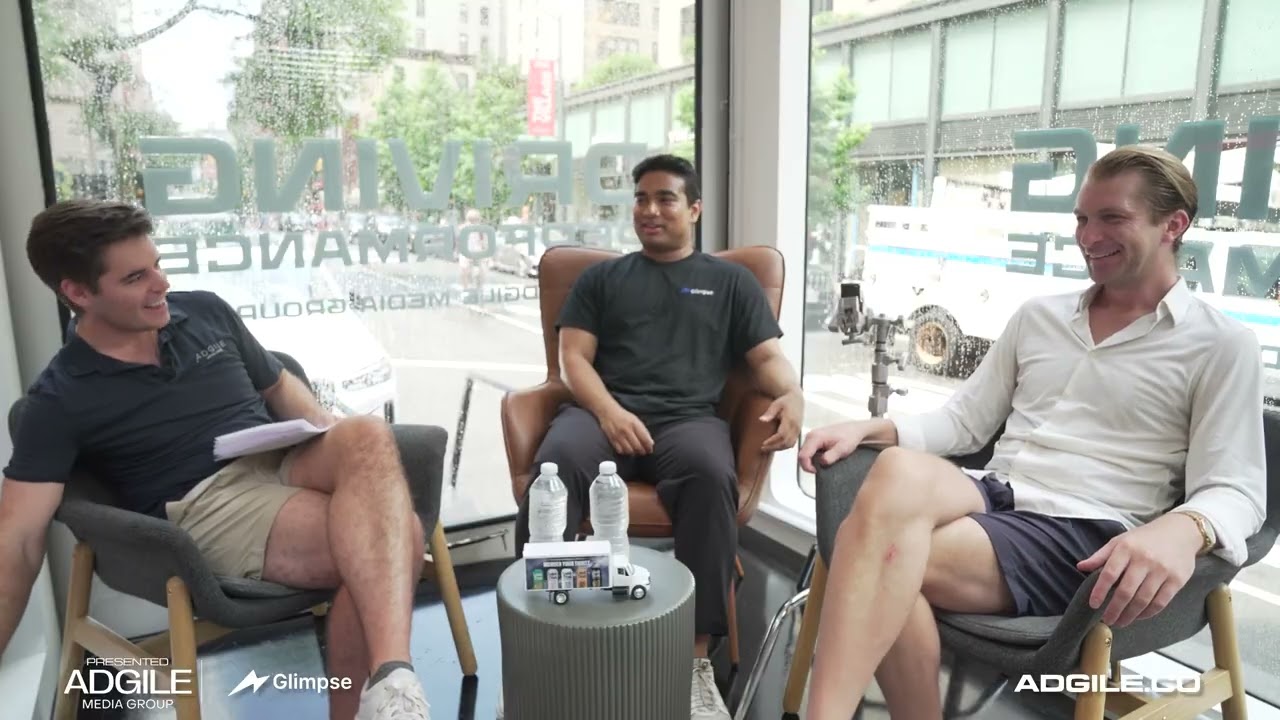
0:13 All right, welcome back to season 3 of Driving Performance. My name is Tom Shea, one of your co-host, the co-founder and CEO of Adgile Media Group. I'm joined by my co-host. I'm Max Flannery. I am also co-founder and I serve as president of Adgile Media Group. I'm really excited to introduce our next guest, Akash Raju. Uh, by way of introduction, Akash is the co-founder and CEO of Glimpse, a Y Combinator-backed startup that's using AI to solve painful back-end problems for consumer brands, trade deductions. In the consu in the CPG industry, manufacturers often lose money through a convoluted system of retailer deductions for promotions, damages, fees, and Glimpse is pioneering a firstofits-kind end-to-end AI powered service to automate and reconcile those deductions. Akash launched Glimpse while still in his early 20s and has quickly raised over $17 million from top top investors to tackle this unsexy but huge problem. Akash, welcome to season 3 of Driving Performance. Yeah, thank you for having me. Excited to be here. Yeah, awesome. All right, so I like to start with the same question for all of our guests. For the audio only listeners, how would you describe what is happening right now? Yeah, this is a very interesting but cool concept. We're in a glass truck in the middle of New York and I see a lot of eyeballs, natural eyeballs outside, but people taking pictures. Yeah. Yeah. In season one, we had some three-year-olds like come up to the glass and just put their nose on it and their thrubby hands all over it. All right. Well, so I want to introd introduce the structure of the podcast. So, as we are in a truck, um there are four stops along our route today. Stop one is going to be the person the personal story. saw all things Akash
1:48 preglimpse family upbringing all the things that led you to where you are today. Stop two is going to be the professional story. We're going to do a deep dive on glimpse kind of the maturation arc and the rise to the juggernaut it's become today. Stop three is a game we call the hot box. It is a tongue-in-cheek version of ripped off uh from the hot seat. So this or that stop question game. And then stop four will be our final stop the outro. We'll send you along your way and uh we'll go from there. You ready to go? Yeah, let's do it. All right. So Kosh um you have a really awesome backstory. Um some of your early intern projects were at Microsoft and Tesla. Why don't we even start further back from then? Where you from? What's the operating life? Are there like any clear obvious moments that kind of influenced you and set you on the path to entrepreneurship? Yeah. So I grew up in Northern Virginia, right outside of DC in the suburbs. Um I don't think I like necessarily had entrepreneurial tendencies younger. I was always like running or starting clubs in high school. So maybe that was a sign. Um and then I went to Purdue, so Big 10, Midwest School, and very engineering. Yeah, Big 10. Uh very engineering heavy school. I found myself naturally gravitating towards a lot of the entrepreneurship clubs. Uh there was a little bit of an ecosystem, but not that much. I guess my first fora was actually trying to build clubs and like get people together, okay, tied to entrepreneurship. Um, and yeah, I mean, you started the company in college, so I guess there's no there's no there's no corporate uh arc beforehand. But what about like family like um what did your parents do, siblings? Anything that influenced I'm curious kind of who built a cash?
3:26 Yeah, I know. That's a really good point. So, I guess my dad's just in like it. Sure. Uh, but my mom is a realtor and I think she was always out and about. So, I was always in the car kind of growing up, right? and she's really good at sales, etc. I feel like that definitely helped me learn a lot about just talking to people, being out there, asking new questions, etc. Well, you end up in AI, so that that deserves some credit here. I was curious being in Northern Virginia, like how surrounded in politics are you. Yeah. So, not too surrounded. I I feel like it's adjacent like all of our field trips were to DC. Um, Northern Virginia specifically, I think, is a big pocket of a lot of politicians, etc. that live in the suburbs. Um, so definitely adjacent for sure. I actually went to a STEM focused high school. So there was exposure to politics and stuff, but I guess a lot of like science and biology. We had a lot of resources on that. But your dad being in IT that didn't have anything to do with DC. Yeah, I guess for the government. So he works like very closely with the NIH. A lot of their software. There's a whole industry called Gov government contracting. Right. It's a lot of the mid market IT companies around Maryland and Virginia that all just have different projects um across the government. Do you do you enjoy growing up there? Yeah. Yeah. I mean I think one thing I really do miss is just like a lot of greenery and trees. I think we all do. Driving without the stress of New York. I know you guys are trucks, but um yeah, I definitely do miss it. I think a big part of New York was that it's close to home actually.
5:02 All right. So Purdue, um, how did you land on? So you had the STEM background obviously. Um, and so that's it's kind of a natural arc, but talk a little bit about Purdue. What did you study there? Um, tell us about some of those clubs that you had were tinkering with and had formed. Yeah. So so I I guess another fact is I'm an only child. So I did not know much about colleges in the US. for sure. Um I knew I wanted to study engineering um or some type of engineering. I think biomedical engineering was my first calling. Um I visited a couple of campuses. I didn't want to stay in state. So those were kind of all the different factors and then Purdue has a really good basketball team. Go there again. And true. Uh when I visited campus, it was just like gorgeous. So I ended up there. Um I originally wanted to be a doctor's like premed, but I quickly learned I'm afraid of blood. So that'll do it. That's that'll do it. Yeah, that'll do it. Yeah, when I got to Purdue, um you're in a first year engineering program and I instead of biomedical engineering, I asked a lot of people what like was a better alternative and I guess like computer engineering was a generic safe bet. I did the same thing. I did compite not cuz it was my calling just kind of felt safe and it was optimizing for a job out of school. I'm really bad at hardware related things. I don't care if I learned that much. But when I got to Purdue, I quickly joined there was this really cool like old church um right outside of campus that was like a student run co-working space by students, a nonprofit, no university affiliation at all. Wow. And I just found myself there like the first semester and I think that was like a big draw.
6:37 Like there's there weren't a ton of startups coming out of Purdue, but there were a couple that like did pretty well that were like in that space and I kind of just went there and I just started like trying to bring people together, host events, etc. Yeah. Yeah. Especially in college. I feel like there's a lot of safety in school that like dropped out or graduated, stayed in West Lafayette, Indiana, which a lot of people don't really say it. And um yeah, I think that was kind of that first foray. Then I started like like an entrepreneurship co-ed fraternity and then brought a lot of alumni back etc. And then junior year was kind of when my like entrepreneurship efforts kind of started. Yeah. And so let's talk about that. You had some really cool internships. um I'd like to talk about them because I know Glimpse is the first swing postgrad and we we'll definitely talk about that. Um but talk to us about some of those formidable I guess professional experiences that you had while at Purdue. Yeah. So I guess my first big internship was at Tesla, but this was the summer of 2018 when I don't know if you guys remember Elon was trying to ramp up the Model 3 production to like 5,000 cars a week. So and I was a factory software intern. So I was literally in the factory writing code. They factory over there or were you somewhere else? I was in Fremont, California. Oh wow. Okay. So you shipped out all the way across country. Yeah. Yeah. So I was in Cal. That was my first exposure to like the Bay Area as well in like Silicon Valley. Um but it was pretty crazy because they created like a full bubble like an extra factory cuz they just didn't have enough of the supply chain ramping up and I was like writing software for that.
8:09 This is 2018. Yeah. So, do you know McMaster car supply company, the hardware company? Like Tesla's like one of our biggest clients. So, I'm probably on the other side because this we got to fill this. And what a spectacle. How how awesome was the factory and it was really cool. I mean like like Elon was on the floor like I saw like you know MKBHD like the big YouTuber. Yeah. They filmed a podcast right above like he's the guy who like looks at uh like it's like a reviews guy but for hardware. Yeah. Yeah. Like Apple products and different things like that. That's a really famous interview. If you like listen 2018 I was like right under you see him sleeping under his desk. Yeah. I didn't but I had to stay over like like till like 4 or 5 a.m. as an intern. I think that was a big part of the entrepreneurial plug as well. I just like dang if I have to work this hard for someone else. Yeah, I kind of have to like I'm totally um so the what was like what were some of the things you were working on in that experience? Yeah. So my big project was like in like the beginning of the supply chain, you have to put the autopilot hardware in. Okay. To the vehicle. So I wrote the software on the factory floor that like the factory employees used to like scan like the VIN, all that stuff and put it into the car. So like it was like it was like an onrem like bash script which is basically just like literally only that one computer and I had to like bring it on online. What were you what was was it like cobalt like what were you writing?
9:42 So I got to bring it so it was bash like online software and I this is like stack overflow days. We didn't have Gemini nothing which I wrote software for most of my professional career preile too and I'm sitting here after this AI wave. I'm like, damn, that was like 5 years of my life that kind of could have done the same output in like one year probably. Yeah, I know. I I realized how slow I was to operate, but then it was still fast for my standards. So, so are you saying that if anything goes wrong with autopilot, cut? No, it sounds like it was more like internal ops CRM likeesque where it was like it was more supply chain efficiency like if the auto did make it into the car. Yeah, that might have bid on me. There was a big fire one time when I was out of town and a staff engineer had to go back on site on like a Saturday cuz I was not in town and I was like yeah. Um all right. So the Tesla phase um so you had moved out there any you still keep in touch any of those like people still in your life. Yeah I mean um I guess so I had at Tesla itself I'm connected to everyone on LinkedIn and I actually had some like mutual friends intern following summers that stayed at like my mentor's house and stuff like that. So definitely stay in touch. Some of them are still at like my mentor is still there five or six years later. Yeah. Yeah. definitely in touch and then I guess I was also just an intern in like the Bay Area. So made a couple of friends really close. Awesome.
11:16 All right. And so that was what was that junior year or is that sophomore year? Sophomore year. How did you even get that big internship? What was that? What were you doing? I was they came on campus and I just like snuck out of a class. I guess a fun story. Yeah. I snuck out of class that you weren't allowed to skip. You only got two absences. I like crawled out. I dropped off my resume and I guess there you go. Yeah, maybe they like the scrappiness. Yeah, that's a theme. All right. And so you get back to school. Um any aspirations to go back to Tesla at that point or you're going to like all right, let me try some different things before I get to the real world. Yeah. So I didn't think I wanted to go back to Tesla. I think like very common thing that is like a CS and com major has like oh what about PM? It's like product you don't have to write code etc. So I played the whole like career fairy game etc. and then I was trying to get like a PM internship but I also was starting to tinkering with tinker with ideas at that point. Were there any So next is is it Microsoft is the next internship as junior year? Yeah. Okay let's talk about Microsoft. Yeah. So tell us uh how did that all come together? What were you doing for them? What are some of those projects? That was actually like a cool like now in retrospect around the wave of AI. I probably would have could have done really well at Microsoft because I was we can't think like that as entrepreneurs. I think everyone's had that at some point like oh that company's now like market cap is $40 billion. Um I was interned on like the AI tools for VS Code which is like one of the most popular coding editors and I think a lot of my I used it for at McMaster.
12:51 Yeah. Yeah. So I was doing like AI tools before people. So not many people know what that is. So how would you describe VS Code? So I guess if you ever learn to code, it should be really easy now in this day and age. VS Code was a very lightweight editor that you can just like open and start writing code in. Yeah. For context, like setting up like an IDE is the term for like a dev environment. It was like super painful. Um it was terrible. Yeah. Like to even push a line of code to see anything online was super painful. VS Code made it like super easy. Interesting. And um I Yeah, so it was really hot like a couple years ago. Um now there's a lot of these like new tools like cursor etc. But GitHub Copilot was one of the first like super AI forward tools. Um so yeah, very popular consumer application. I uh I've always had this macro thesis that I still think holds true today that more and more as a society we're just becoming plumbers. We're like you don't know who's maintaining the the software package. did some like PhD from Oxford, but really what matters is can you take these different things and plug them together and I feel like VS Code was one of at least in the software context like one a massive accelerant because it you didn't have to worry about all those underlying components. You just showed up, you coded and honestly that that's probably somewhat problematic as a society that like over time we're no longer getting the really deep cuts of like all the C sharp and that's like underlying all of that. But um so what were what were some of the projects uh you were working on VS Code in what capacity? I that was probably like a massive team and it's probably hard to be like there was a I was doing this specific thing but what sort of exposure was that?
14:29 I think as an intern it was just like one specific project. So um they had like a ML recommener. So I guess the big innovation of VS Code was instead of all these different tools they had extensions in the actual interface they can add in and like app store. An app store. Yeah. And I was working on like the Azure machine learning recommending recommener system. It was just like a lot of like customer interviews like UX research. Um and then trying to get one specific feature of how it comes into the interface as a project. Honestly, I was like pretty I guess it's a long time now like half time there cuz I was working on like our first startup. So it's like every day after work I would just like go with my roommate. We would just go work on our own things. Yeah. Got it. And so where was that internship? Seattle. Seattle. Okay. All right. Wow. But we lived in Redmond, like literally on campus, and had a car. And then I just like hiked every weekend. Like every popular hiking trail. We're far from that, brother. Look around you. I know. I miss that a little bit sometimes. And I think the summer is the only time that I would want to be in Seattle. It rains every other month. Yeah, true. That was definitely a big thing. Like the summer was so perfect there. But I remember my manager told me like his favorite thing was like just rain and drinking a cup of black coffee and he like lives deep in the mountains and stuff there too. They got breweries. Yeah, there's some places to camp out. Yeah, I worked in Portland for a while and it was it was just 100% rainy season and I was like, "You guys have to enjoy this in order to remember when when
16:00 McMaster so my first job I was in Los Angeles." Then McMaster was flying me out to headquarters of Chicago for this project, but they only flew me out to Chicago over the summer for like 3 months and like, "Hey, will you move here full-time?" And I was like, "Honestly, city's kind of fire." Like, "Yeah, up and down." And then I remember I get off the plane, it was 86° in Los Angeles. I get off the plane and it's like in the negatives. It was 100° swing. And the first day I'm in an Airbnb. I'll never forget this. Downtown. I look outside my window. I have it on Snapchat. I think I've probably said it to you before. Some motherfucker's just ice skating on the sidewalk with his hands behind his back like, you know, enjoy on the sidewalk. I'm like, "What the hell is this? This doesn't even look like it's weird for him. He's like literally pretty comfortable with this environment. They're roller rollerb blading in LA or ice skating in totally Chicago. All right. Um then so you teased that you were tinkering on this side thing. Does that eventually become glimpse or is there you working on something else pre-limpse? Yeah. I mean I guess everything there's like a preeration to glimpse cuz it's all the same entity the same day. Actually the first thing we ever worked on was honestly like a very baby version of what you guys have built in agile. We were trying to do like trucks on campuses. Really? Yeah. So we held like You're tired. I know. We had like a local maker set up a popup and we parked it in the middle of campus which drove a lot of like direct revenue. Yeah. And Yeah. And then I I know we had like this whole iteration of like, oh, can we get like used trucks? Yeah. Yeah.
17:30 Like it's really cool that you guys are doing so well. Thank you. But that was like like junior year before this internship. Okay. And then I think the thing that became really real then is like we had just applied to like YC just as an idea. This is where every pre-COVID everything was. All right, hold up. Stop two. We're at stop two. We're moving to the professional story. Get back into it. So yeah, let's talk about the um the Let's start with Y Combator cuz I think that's probably the launching pad. You guys are obviously working on it beforehand, but that's probably what gives you the win under your sales and the validation to feel like you got something here. So tell us about um well you have co-founders right? Yeah. So why don't we start there? How did you link up with the the founding team and has anything change? And then let's talk about the Y cominator application and experience. Yeah. Yeah. So I met my two co-founders at Purdue. Um very grateful to them. I think a big shout out to my co-founders. A big reason of why we're even here today after all of these pivots was just like the three of us were very locked in since we were in college. cracked cracks. They call it crackers. Um but they Yeah, I think it was a lot of like spontaneous things like they both just joined one of the clubs that started that was like entrepreneurship focused. Yeah. Um I became really close to one of them. We were just working on an idea and then my other co-founder uh came on a trip that I had organized in the Bay Area and like we all like linked together after.
19:01 Um and we just literally worked on every type of idea you could think of on campus like breakfast delivery service that kind of viral like breakfast boxes delivered to your 7 a.m. class. Um this pop-up truck idea where we held one pop-up that was that was the permanent or unpermanent? Uh no permanent. All right. Yeah. Yeah. We were I we were going to do it on permanent then like last minute the Purdue Police Department came through. Yeah. Well, welcome to Max and I's life. A permanent Purdue is probably a little cheaper than a permanent New York City. Why? We didn't we didn't even have a location for the shoot until 30 minutes ago and we might get moved. We'll find out. Um I can imagine. Um but yeah, I think like we applied to YC. We actually didn't get in the first time we applied, but since it was in like pre a precoid world, they flew us out and that's when everything felt real. Like, oh, we were this close to getting like money to do something that felt so intangible cuz we were still students. I think like the biggest thing about starting something in college is like there's no push for the risk tolerance cuz worst case you just go back to class. We all had full-time jobs lined up and stuff. And so, what was the business model for the first time that you applied to YC? Yeah, it was like the or I guess like the broader trend was experiential retail on college campus. We applied we we applied right away. We didn't get an interview. We didn't get a call back. We got nothing cuz a kosh took our spot. Like these guys are on like idea 7. Max and Tom are on idea one. I mean we should go with a cop. Was this 2018? This 20 the 19 2019 summer.
20:35 I think that was the same year. I think like the thing that they were into is that it was college campus focused because we were in college. They were like we're too old. They're like, "Oh, you know how to get into campuses." But yeah, we ultimately didn't get in cuz I guess they thought that like the ultimate hack was that we could figure out like just underutilized retail or like like like student buildings and stuff like that and more of like the software platform, not like the marketplace we wanted to build, right? Um, but we still went back to school that senior year and we're still working on this. But then I guess the way that we evolved into our first business was we were thinking about like mechanisms to host pop-ups on college campuses and we were like, "Oh, what are more scalable mechanisms?" And the first business we ended up starting was um like product placement in Airbnbs. So imagine like a luxury Airbnb. The bed sheets were sponsored by like a brand, the coffee sponsored by a brand. I mean, we're in CPG. You know how big sampling and all that stuff is. Exactly a market for that. Yeah. Yeah. And soft goods were like very relevant cuz the trial piece like our big innovation if you think about the consumer conversion cycle was the trial piece of it of course. Um so that's the business that like got us to like go all in cuz like Marriott or Hilton like they'll sell you the bet sheets that could be the same. And a lot of brands we work with, they're like trying to get in there just to be like it's more touch points, it's more exposure. And I don't even know if they make any money on probably not. They're probably gifting products just to try to get in front of high individuals. Yeah.
22:08 Yeah. If you guys are a big fan, let me know. We got a full CRM. Sounds good. Um but so that that's what you apply the second time to YC with. Yeah. And we started this February of 2020, a month before co so well we started an out of home company around the same time. So we could say kudos to you guys. Hey, we're all here in the box. Yeah. Uh we thought we thought the business was dead right after cuz Airbnb literally like um but surprising our big like I think the big unlock for us and like we applied to like I thought I had built a pretty good network at that point. We applied to like every student focused venture capital firm like etc. And there was a lot of interest in February and then April shot out a lot of emails just like ah co watch what happens etc. So we like I actually didn't know what was going to happen. Um my co-founder was going to be a consultant in New York as his full-time job. His start date got pushed like a year and a half. Oh and um yeah but then we applied to Y cominator again. Um, I think our big like thing in the application that probably stood out was like we saw that Airbnb bookings were coming back that summer like before it was even public or like anything like that cuz hosts were starting to reach out to us saying like, "Hey, we're fully booked up for the summer." And I think asymmetrical information. Yeah. And I think the big reason for that was like no one wanted to stay in hotels cuz it was like all the same. So all these like far out of the reach Airbnbs were popping back up. Yeah. And we interviewed with um our partner Gustaf who used to be the head of growth at Airbnb and I think like that felt like a strong fit and um yeah I
23:43 guess that's the origin and then from then on been a full-time founder. Yeah. All right. So let's talk about the YC experience. Um I think us included as aspiring as an aspiring at one at one point like what I think so many people have questions about like what that experience is like um what the interview process is like. So tell us about your experience. Did they you were did you were you in the Bay Area for that duration or was it all remote cuz of co Yeah, we did it and we had the very typical lived in my parents basement coounders moved in for 3 months. Wow, that's cool. Yeah, it was I guess it was cool pre and then reflecting on it but in the moment it's definitely it's a bummer. You wish you were in the Bay youth just got hijacked. Yeah. Yeah. I mean everything like senior grad trip everything like none of that stuff happened. Um it's a hell hell of a story though. Yeah. Yeah. Yeah, thank you. Um, yeah, I mean application wise, I mean I think like the big probably misinformation on YC is that like it is almost like an application that you can like optimize or get in, but their in their alpha isn't picking like like 100 or 200 potential winners and not like 100 or 200 good businesses, right? And I think in that way, like if I had to guess, like they'll lean to like a crazy idea with no trash in 2000. Absolutely. Like binary. They're it's binary. They're looking for a billion or zero and not really interested in the $100 million in between. Exactly. And I think that's what makes it hard where a lot of people on like social media, etc. are like, "Oh, you can like figure out it's like college applications that you can like have really good numbers, whatever you get
25:16 in." Um, and I think in that way it's like you almost don't really know what's going to happen. Referrals definitely help a lot. I think there's a higher hit rate um if you have a referral. Um and then the interview process that's like the most interesting experience. Um and we did it in person the year before. Super intense like one partner was grilling us with questions. One said nothing and was just like watching us. Yeah. And then the other person who actually was our champion asked like one or two questions. Okay. It's very different in Zoom. I've said um they're fully in person again. So if anyone applies now like you'll be in the Bay Area. they have a new office, etc. But for us, we were in Zoom, so we couldn't even gauge like reactions, body language and probably on the flip end, they couldn't gauge anything for us as well. They just saw a screen. Yeah. Um, be in your underwear. Yeah, exactly. Um, and yeah, it was just like 10 minutes of just like brutal questions. No like positive reaction, anything. There's like no way to know. No closure. It just ends. Yeah. All right. Well, we did our best. Yeah. Yeah. And usually I feel like people always are like don't think about it then go get a drink or something after. But for us like we were just all at home like I thought about it like all day. Um and then we actually didn't get in immediately. We got follow-up questions right after. Okay. And then we answered them and it took like 3 days to hear back. So we actually thought we didn't get in and then um yeah I guess nice started and then we were all remote. Yeah. It was interesting cuz we were remote. I think and I'll talk more about like the actual YC experience, but it was definitely interesting when we were like a lot of the like my I have a lot of close friends that are YC founders.
26:51 It's not like they were in my batch. It was just like later on when you're alumni like we catch up. You have something in common. Um so all right. So are they on the cap table at once? Yeah, technically cuz it's the same. Okay. Same entity reinvested in our most recent round. Still talked to our partner. Awesome. All right. So I think I want to move it over to Glimpse now. So let's talk about can we go through the YC process like I want to know cadence what who were you talking to there you know like what did they provide valuewise things like that? Yeah. And when was the pivot? Yeah. Yeah. So process-wise you have like group office hours with like four other companies like every two weeks. Then you meet your partner every week. And I think like YC was definitely the hardest we've ever It's like impossible to replicate because you just have someone that's just asking you about your metrics every seven days. Yeah. And if you don't go up, you're just like, "Oh, why?" And then you know there's a 3 month time limit of like it's like a binary like you're going to be in demo day and then you raise your total. So there was a lot of pressure and we were pivoting through the batch as well. Classic for us. Um, so it was like super intense and especially being at home and it was like hard cuz like we couldn't travel like we were like like you couldn't travel on site etc. Um, so literally just week over week growth is what was being measured and I think YC's biggest value if you've been a founder before like and for us we just learned a lot about the process but fundraising was like the biggest thing.
28:22 They used to have a pressure cooker of demo day at the end of it where there's like a thousand investors and it's just like I had 80 meetings in like under two weeks. Wow. And it really huh? Also all on Zoom. All on Zoom. Yeah. I've never met a lot of like um and the batch before is actually pretty infamous because co happened right in between. So it's really hard for companies to raise. I think we had the first uptick of like people were deploying capital again. Yeah. So, ended up being a smooth process. That's probably like the biggest value from YC other than just like reharing like make something people want, ask questions, etc. We actually ran that business for 2 and 1/2 years. We got to a million in error. Um, then we ultimately like hard pivoted at the end of 22, early 23. So, it's like it was a really that was probably like the hardest Yeah. period for us cuz we had to like let go of a lot of folks, go back to the three founders. We had something that was working that was good, right? But we didn't think it was going to become a massive company. Um, we had some like elements of product market fit. Now being on the other side of it, I don't think it was like real product market fit, but it was really hard. We just kind of knew that we like we're not going to hit that next stage. Yeah. So, what would what were the terms that YC gave you? Is it like 150,000 for 7% or something? Yeah, that's when we did it. I think now they have a slightly different model which is like 150 or something like that. And then they give you more money at the terms of your first in check. called a MFN. Um, but for us, yeah, 150 and then I think the value there is like it's a lot of equity, but then the markup that you raise at the day pretty much balances
29:58 out the same as like a traditional preced. So looking back like obviously YC is like a hell of a credential. Um, but like do you think that there has been value and it sounds like there has been what I'm hearing is that it made it easier that credential made it easier to raise from other VCs. Um, and then also put you into, you know, a fraternity of other alumni that um, you've stayed close with. Have there been any other Yeah. values that you you look back on and Yeah. Yeah. I think the number one thing now honestly like now that we've crossed that initial capital threshold is like they have a job board called work at a startup nice and because for talent that's not as expos like I think where um the YC credential helps the most is talent essentially cuz that's what they associate too especially if they're like someone not from the industry that is like coming in like what we do now which we'll talk about very cool very sharp pain point no one knows what it is so I think YC as a job board like like almost More than half of our team has come from like inbound to our job board. That's cool. And they're just cuz they're like their first exposure. If you ask someone that wants to break into startups, it's like you give any advice, it's like, oh, look at like Angelist, look at like YC's job board. Yeah. Yeah. I think that has been like today if I had to reflect on like a dollar value KPI like um has been the number one thing after capital. Cool. All right, let's feel like we just went through YC. So, I'm done. I don't need it. I don't need anything.
31:29 Yeah, you're way off. Way off. All right. So Glimps has almost nothing to do with uh those past experiences. It's in consumer which it sounds like it has some exposure to but not like an insane amount. So let's talk about the pivot to glimpse and then let's dive deep on glimpse. Cool. Yeah. So beginning of 2023 we had officially hard pivoted and gone back to just three founders. It was just us three. no idea semblance but I think what we had committed to was a process which was we're gonna stay with one of the two segments that we know well so we had a lot of relationships with brands from working with them and Airbnb hosts we quickly were like we're going to focus on brands okay and I think the first world that we spent almost like almost a year on was um a lot of brands used glimpse because it was their first foray into like physical right so going deeper and deeper into that it was like retail exposure etc. and we were helping them become omni channel. So our first pivot actually was a subset of that which was like the pain point of excess inventory. Okay. So we actually ran like first a consumer focused and then a B2B focused liquidation marketplace. Okay. For like 7 months and then we were like making revenue. It was like like there was viability that it could be a business. I know some liquidation companies that it's a real business. Um, but I think what led to the pivot was we had this like crazy deal that we were working on, which was like a beauty company with excess inventory, and we were trying to get them into the Bed Bath and Beyond litigation sale. Okay.
32:59 And that required going to every single product like decoding like the barcode and that there's like 50,000 units. So, we actually um went down to like somewhere not Miami, like an hour away. We use this app called Trauma, which I guess small shout out to get like a full like labor force that people watch. We created a mini supply chain to take 60,000 units. And I think we were like, okay, like clearly there's a business here, but I don't think it's like for us, right? Right. And so when we pivoted away from that, we had built a lot of relationships with CPG brands now and like consumer cuz we kind of went from like DTC focused brands that are trying to break into retail to now a lot of liquidation brands. we started just going deeper into their pain points and um I think what we realized was like CPG brands specifically like they don't necessarily have like the highest software budgets not used to making it purchase that expensive lower margins etc but um and we like spent a lot of time in like CPG data CPG merchandising etc and I think we and deductions as well I think we came to the thesis that like now with AI there was a unique opportunity to kind of have like a serviceled approach actually find workflows that were typically like Excel and later and then provide a full intend workflow to solve it and that kind of felt we were like in a way almost like first to market. It was a big blue ocean. Um and we tried a lot of different variations of this and even tried to just like almost make a like a directory of like automations and sell that. I think what we learned was that there's no market pull there cuz you
34:36 really need a sharp thing to like pull from and we were talking to brands every day. and like trade shows etc. Um but I think like 2024 expo um was actually like we just went we walked the floor and we just kept asking about some of these different ideas we had around like data like deductions merchandising and the pain point of deductions which we'll go into just kept coming out. Sure. And I think like or like then we were like okay there's like something here um and this is like now March of 2024 so in that like not that long ago that long ago. Um and then we like came back from Mexico and we just had a couple of clients that were just like go get me some money back. Yeah. And that's like what became glimps now which um like our oneliner today is that we are automating the deductions management process for CPG brands that sell in retail. So if you sell through like Khei Unifi, Target, Amazon, Walmart, we will come in, we'll give you a full platform and we'll get you money back. Um and our broader venture thesis at this point was a suite of services for all types of back office work that these brands have to deal with. Um yeah. So how for people who are maybe not in the industry, what is a deduction and like why do brands experience it? Yeah. So deductions are the second biggest line item after inventory. They're the fees that brands get uh when they sell to a third party retailer. So like a Target or Walmart as a cost of doing business. And the categories of these deductions can be anything from like marketing. So imagine you're a brand and um you have an end
36:13 cap display at your Whole Foods, which basically means you walk the aisle and there's just like one brand that's just sh like just their products. That comes through as a deduction in terms of how you pay for it. Or say you received an order for 100,000 units for $100,000. You ship that much inventory to the warehouse of the brand. Um, but you only re uh you get charged say you only shipped 80,000 units. That's a deduction. Um, and I think the like harsh reality about the industry is deductions are like typically 20 to 30% of a brand's total margin. Um, but 10% of these deductions are typically invalid. Yeah. And a lot of that can be tied to like like invalid data entry um overcharging just like could be like honest mistakes. So for a brand that's like 2 to 3% of their topline revenue. So like $10 million brand that's like $200 $300,000 that there's typically lost. But this is a completely manual process. If you look at like a like a process map or chart, this lives in the office of the CFO, but the finance team doesn't actually know what these deductions are. There's like 100 to 200 different deduction codes on a per retailer basis. Uh, so they get these deductions, they funnel through all in like PDFs, CSVs, Excelss, death by a thousand cuts. Exactly. Because it's retailer specific. So you start doing it, it's like, okay, what am I going to fight this couple hundred couple hundred, but you scale that to So just to summarize, if I have a product that um Whole Foods is selling for $10, yeah, they're still making margin there.
37:46 They're they're paying me five for that widget, right? But if but then they're going to nickel and dime me on the five if if there's an end cap if you know I make a mistake and things like that and there's a formatting issue between all of the different retailers. Um and sometimes they just make them up or they make mistakes and they're valid. Yeah. So it's just like it's hard because there's almost two pain points. There's the full like time spent to actually reconcile this like finance and accounting job just to get this into the books because you had booked $100,000 PO you got paid 60 you have to fill that $40,000 to like acrue these deductions. The other thing which a lot of brands don't even have time for is like once you've done that then you want to review every single deduction to make sure it's balanced cuz you're leaving money on the table. So we started off with the wedge of like that second piece of like can we get you money back right and then now we're becoming that full platform and like if you just have to use like AI terms right it's just like a lot of the same things you see in AI companies of like okay there's a lot of document processing and document extraction some of these deduction documents are like 150 pages long um there's like agents to pull deductions which like is usually in one or two people's full-time jobs at large companies and then there's deduction validation which is like comparing in two sets of unstructured documents and then there's the actual disputing which is like submitting a claim waiting 60 days to get the money back and it's just like insane that this is how no it's
39:17 legacy operations um okay so in terms of where Glimpse is today um tell us a little bit about so that obviously it seems kind of straight or operationally probably complicated actually let me back up um how it's AI based how did you get all of the data to train models to be able to do this in an efficacious way. Yeah. So a big part of our approach is instead like the reason we're not deductions for anything today is we do have to go on like literally like a retailer by retailer basis to train on every single type of document to get to that like 99% plus accuracy. And yeah, I mean we like a lot of the AI 101 of like we have to create test data, test it, etc. So for like the first year we were just serving brands that sold through Khe and Unifi which are the two like biggest natural products distributors. Um and then in the past quarter we've just started expanding like pretty aggressively. Yeah. Um but yeah I think like probably wrangling cats trying to get all that in the beginning for the first for the first iteration. Yeah. Yeah. Literally every document's different. There's 150 unique types of documents. They might come in a CSV and TXT file. Um it's like pretty insane. You probably got to update them on some recurring cadence, right? So for someone who's not technical, like walk me through like what that looks like like tactically like where like what software are you starting with and then like how are you getting the documents to train the model on and how much is coding? How much is like
40:50 people talk about training a model? Like what's that look like? Yeah. So if you had to break out our product like more like like I guess like BC lingo almost in a way. It's like today we effectively have like four AI agents for that full process. The first piece is like deduction retrieval and that's like in an old world it's like what like an RPA like robotic process automation which is like imagine like you do these 10 steps to go download a document. will now do that but also have like error handling built in that the AI can kind of handle. Okay. And that is on a per retailer basis as well cuz each one of these retailers has different portals or they send things to your inbox, right? Um and then the document processing piece. Yeah. I mean it's a mix of like computer vision plus like an AI system to normalize the data that you can then pass through an LLM. So because we're doing document processing, you can't even like like a lot of these new companies like OpenAI, like Anthropic, Gemini, they're like LLM, which are language learn or large language models, which is for textbased data to still get that text in the first place. You have to like do like old school AI in ML, which is like computer vision, OCR, etc. Exactly. And we have like this cracked like our third engineer uh like ML engineering uh that um shout out shout out um and we've built a really strong engineering team that's like all like like designing wanting to work at an AI company and it really is just like you have to create test data like manually extract
42:24 these like we have a offshore team as well that's like we're getting these documents getting things and you have to keep just comparing and then when you have that you get more test data etc. until like the OCR is now 99% accuracy. We're normalizing the data and pushing it into our database with like all the exact elements and then you can do more of like the automation work. Got it. How many unit tests? Um Okay. Um All right. So, we got a $10 million fund raise April 2025. Uh I want to wrap up here. What's next for Glimpse? Yeah, I mean um there's a couple of things. So, one, we're expanding our deductions product to as many retailers as we can. So, more coverage. So, yeah, you know, in this past quarter, we launched Target, Amazon, we just launched Walmart, Costco, pretty much going after all of the big box to serve 100% of coverage. Um, and then the other big thing is like, you know, our vision was that deductions was the wedge. What we're actually building is an AI native platform for all types of back office services. So, we're expanding into like accounting workflows, like trade workflows, sales workflows, etc. We're building our team here fully in New York. We're fully in person uh team in Midtown. We're at like 20 folks now, so hiring for a lot of different things. Um, but yeah, just trying to keep growing as fast as we can. Congratulations, man. It's been fun to have a front row seat to it all for real. Thank you. Yeah, we use Adgile. Shout out for a big marketing effort for us at trade shows. You'll always see a blue truck driving around. Thanks to the agile team.
43:56 We appreciate it. All right, stop three. It's the hot box. You ready to rock? Let's do it. All right, give up email or give up Slack? Email. Cold plunge or hot tub? Cold plunge. Sweet snacks or salty snacks? Sweet. Sampling into storere or influencer unboxings? Uh, in store. Coffee or tea? Coffee. Canva or Figma? Figma. Like I don't throw it everywhere asking something else. Should I ask you your favorite AI? Actually, what is your favorite? Do you have claw chachi? Do you have any? Oh, yeah. I'm living in chatbt. All right. Texting basis. Open AI. Um, winter or summer? Summer. More dominant consumer trend, protein or fiber? I think or fiber is what it's going to be. But right now, I'm a proteiner as well. Yep. Telepathy or teleportation? Uh, telepathy. Neat or messy? Messy. DTC or D2C? D2C. No, no, no, no. DTC. D. People don't know. They just I have it locked. Betting $50 on red or black? Black. In-house or outsourced? In house. Board games or video games? Board games. Spotify podcast or Substack? Deep dives? Spotify podcasts? Beach house or ski house? Beach house. I know this one already. Work remote or return to office? Five days a week in person, baby. Sunrise, seven days a week if you want to join Glimpse. Sunrise or sunset? Uh, sunset. Twitter, LinkedIn, Instagram, TikTok.
45:32 I consume Twitter, but I chill on LinkedIn. Yeah, that's that's where this will be posted. All right. Uh, pineapple pizza or candy corn? Neither. Yeah, you got to pick. That's the game. Uh, candy corn. Live music or DJ? Uh, DJ. Advertisement or advertisement? Advertisement. That's been the best reaction we got. Call, text, or audio notes? Text. Give up bread for life or cheese for life? Cheese. Air guitar or air drums? Drums. Start early or leave late? Leave late. First. Trucks or billboards? Trucks. There we go. Receive good news first or bad news first? Uh, good news. All right. Well, the good news is we're at our final stop of the show. So, K, thanks. You've been a really great guest. Thank you guys for having me. This is awesome. Stop four is the outro. Where can people connect with you? Where can they find Glimpse? Yeah. So, I our website is trigl.com. Don't have the full glimpse.com yet. Uh glimpse on try glimpse on LinkedIn. We're on Twitter. You can find me on LinkedIn and Twitter at akos Raju4. And yeah, you can always email me. Just you can probably guess it if you're good at that stuff. So you say hi. All right. Well, thanks a thanks for coming on the show. Yeah. Thanks so much for having me. This is awesome.